Sunday, May 2, 2010

F1: Hakkinen To Become Hamilton's Manager, Ferrari Rejects 'Subliminal ...

RUMOURS have intensified this week that Mika Hakkinen could soon become Lewis Hamilton's manager.

Following the McLaren driver's professional split with his father Anthony, 25-year-old Briton Hamilton has been perusing offers from potential managers.

1998 and 199 world champion Hakkinen, 41, already works with a young F3 driver at his own manager Didier Coton's Monaco based Aces Group, and said last Sunday: "Perhaps I will come back to F1 as a manager."

The Italian sports daily Tuttosport now reports that the formalisation of a deal between Aces/Hakkinen and Hamilton could be made in the very near future.

Hamilton's career is currently handled by McLaren, but team boss Martin Whitmarsh is pushing his driver to appoint a "dispassionate, independent" manager.

Hakkinen won his two world championships with McLaren and retired in 2001.

(GMM)

Ferrari Rejects 'Subliminal' Cigarette Reports

FERRARI has rejected reports that it is running illegal subliminal advertising on the livery of its 2010 formula one car.

A report in the British newspaper The Times this week said the UK government has been urged by health experts to investigate the 'barcode' branding on the F10 that resembles the cigarette packaging of Ferrari's sponsor Philip Morris.

In a statement issued by Ferrari, the Italian team insists there has been "no (Marlboro) logo or branding on the race cars since 2007, even in countries where local laws would still have permitted it".

(GMM)

McLaren most reliable team, Sauber at bottom of pile

Apr.30 (GMM) Drivers' and constructors' championship leaders McLaren are also winning the race as F1's most reliable team.

The British outfit, whose Jenson Button leads the drivers' table by 10 points over Mercedes' Nico Rosberg, completed every single lap with both MP4-25 cars at the initial Bahrain, Australian, Malaysian and Chinese grands prix.

In second place, a 100 per cent record for Ferrari was tarnished only by Fernando Alonso's engine failure in the closing stages in Malaysia.

Red Bull is third with a 92.4 per cent finishing record in 2010, despite the RB6 appearing to have suffered from several reliability glitches so far.

In fact, Sebastian Vettel's wheel nut problem in Melbourne was the team's only DNF, while teammate Mark Webber has completed all four races within the top 9.

Similarly, only one Mercedes car - Michael Schumacher's in China - has failed to reach the chequered flag, but the German team is fourth in the list with a 89.2 per cent record due the stoppage occurring early in the race.


Williams' single DNF culminates in a 86 per cent reliability record because Nico Hulkenberg was taken out on the first lap in Australia.

Renault is sixth of the ten teams with 75.1 per cent, for while Robert Kubica has finished every race with the R30, rookie Vitaly Petrov's first race finish was in China.

In Bahrain the Russian damaged the suspension by hitting a kerb too hard, in Melbourne he spun into the gravel, and in Malaysia he had to stop with a gearbox problem.

Impressively, the new team Lotus also has a 75 per cent finishing record, even though Jarno Trulli was not actually a classified finisher at Sepang because he was ten laps behind.

And in Melbourne, the Italian's T127 was not even on the grid due to a pre-race hydraulics problem.

Toro Rosso's Jaime Alguersuari has finished all the races, but teammate Sebastien Buemi was taken out on the first lap in both Australia and China -- first by Kamui Kobayashi and then Vitantonio Liuzzi.

Force India is now increasingly mentioned as a serious F1 competitor, but its reliability record so far in 2010 is just 65.9 per cent.


Liuzzi crashed in China and had a throttle problem in Malaysia, while Adrian Sutil had a Ferrari engine problem in Melbourne.

HRT's F1 career started badly with only one car crossing the line in the opening two races.

But the Dallara-built cars of Bruno Senna and Karun Chandhok both finished in Malaysia and China, giving the Spanish team a 65.2pc finishing record.

Virgin and Sauber are at the bottom of the pile, with Virgin achieving a mere 33.8pc reliability record with only Lucas di Grassi able to cross the line in Malaysia by aggressively saving fuel.

Sauber is last, with only Pedro de la Rosa recording a race finish in Melbourne for a reliability record of just 25.5 per cent.

"We've suffered too many reliability issues on both the chassis side and with our engines," team founder Peter Sauber said on Thursday.

"That's very unusual -- we've always been one of the best teams in this respect over the years.

"We've closely analysed all the chassis-related problems and already put measures into effect. Our engine partner Ferrari is doing the same," he added.

(GMM)

Slow Economy Brings Certain Collector Cars Within Reach

Getty Images Pontiac GTO: Accessible for collectors on a budget.

In the last few days I have happily wasted time leafing through the catalog for this weekend’s Sporting Classics of Monaco auction. The event is out of range in every way for me and for the average car nut. But it got me thinking of the collector-car market and where one can find a deal.

While the economic downturn drove down prices for antique cars, Monaco is about the worst place to go discount shopping. The sale that RM Auctions put together included brands like Ferrari, Jaguar, Aston Martin and Mercedes-Benz that were among those least affected by the recession. Indeed, prices of some European sports cars seemed to appreciate even faster during the recent hard times. But this it is a bargain-hunter’s market for fans of American muscle cars or other models that have yet to take off.

Cars like the Pontiac GTO, Ford Mustang Boss and Plymouth Hemi ‘Cuda, essentially hopped-up versions of mass-market models, cracked the million-dollar mark a few years ago as demand from seemingly crazed collectors and speculators reached new heights. But when the economy sagged, prices for such cars fell like stones, driven by the same supply-and-demand rules we learned in Introduction to Economics. Compared with 1960s Ferraris hand-built in batches of less than 100, U.S. muscle machines that rolled off assembly lines by the thousand will never be truly rare.

But that shouldn’t stop you if you like driving and looking at them. There would be a lot less heartbreak in car collecting if people would just buy what they like and stop trying to turn old cars into investments. I cringe every time I hear the word “investment” in a discussion about cars because you are almost always better off buying stock.

I’ll never forget the teacher at my high school who avoided driving his 1978 Chevy Corvette, a special Indianapolis 500 pace-car edition, because low mileage would make it appreciate faster. Today, some 30 years after he made the comment the car is worth what? Maybe $20,000 if he’s lucky.

If the collecting bug ever bites hard enough to send me shopping for an interesting old car I think I’ll look for a “sleeper” –  something with potential that others haven’t yet discovered. I’m sure some of my favorite 1980s cars like the DeLorean and the Magnum P.I.-style Ferrari 308 GTS will eventually hit their stride, but I wouldn’t keep them in the garage while I waited.

Ferrari.com Speak Chinese

As reported by Ferrari

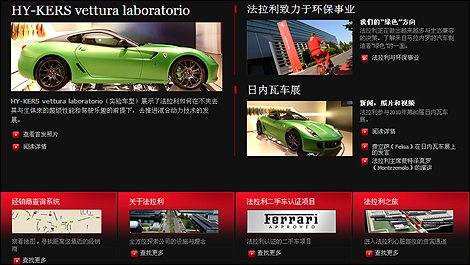
Maranello - In occasion of the opening of the Expo of Shanghai Ferrari for the first time in its history is launching a Chinese version of its official site. This will be the fourth language that visitors can choose from. It is further proof of the importance that the Chinese market represents for Ferrari and comes straight after the historic world premiere of the 599 GTO at the Beijing Auto Show and contemporaneously with the presentation of the Hybrid concept, the Hy-Kers, at the Expo’.

The website is dedicated specifically to its clients, enthusiasts and fans whose native language is Chinese, not only in China, in Asia but all over the world. It aims to foster an even closer relationship between the Prancing Horse and the Chinese public, and boost the number of Ferrari web users in China by eliminating any language barriers.


Photo: Ferrari
Enthusiasts, clients and fans can navigate the site content, enjoy live news updates from Maranello and experience Prancing Horse emotions, activities and products at close hand. They’ll discover interactive areas, exclusive images, complete information on all the cars, the F1 Scuderia, News, Community and the Ferrari Store. Thanks to the Maranello Experience, they can even enjoy a virtual tour of the entire company thanks to video clips and other images. The site also allows users to select and personalise the cars in the current range.

Ferrari sold its first car in China in 1993 but it has had a commercial presence since 2004 and last year over 200 cars were sold. Today, Ferrari has 10 dealerships in the country covering Beijing, Shanghai, Guangzhou, Shenzhen, Hangzhou, Chengdu, Chongqing, Nanjing, Dalian and Qingdao. In 2008 the Ferrari owners’ club was established and in 2005 Corso Pilota Ferrari driving courses started to enable Chinese clients to improve their knowledge of their cars and their own skills behind the wheel.


Topics: ferrari, saab, web site, news

Ferrari that came back from the dead

They found her in pieces, lying among piles of abandoned washing machines and broken refrigerators after police smashed an organised-crime ring and swooped on a scrap yard in the sleepy municipality of Besenzone in northern Italy. It would be several days before David Cottingham would receive the news.

The discovered body, missing for eight years, was that of a Ferrari motor car, hand-built half a century earlier to take part in a race that bills itself, with good reason, as La Corsa Piu Bella del Mondo ("The most beautiful course in the world"). This Vignale Spyder 166 MM took its initials from the Mille Miglia, the "Thousand Miles" race which, for more than 80 years, has obsessed the world of motor sport with its irresistibly heady mix of social glamour, stylish design and unrelenting speed – a dangerous combination that has claimed dozens of lives.

From a verdant site in rural Hertfordshire, Cottingham, a 66-year-old physicist, nurtures vintage Ferraris back to life. He has dedicated a good portion of his existence to this particular Vignale Spyder, bringing the car back from the dead not once but twice, after it had passed through the hands of multiple owners, from Italian gangsters to eccentric German collectors. When it was found in the scrap yard at the end of 2007, he was informed by a German-based Ferrari historian and immediately set about his greatest challenge.

And this Thursday, Cottingham will be at the start line of the Mille Miglia at Brescia, at the foot of the Alps, to watch this extraordinary vehicle – which he refers to as "0314" after its chassis number – take part in the event in which it was originally designed to compete. "It's such a powerful little car," he says. "I was so happy with the restoration because this is what I do: make the cars look absolutely as they were when they left the factory. But the proof of my labours will be when it works properly in the Mille Miglia."

Oliver Wheeler, the amateur sports-car racer who will be behind the wheel for the 1,000 miles next week, has been testing its capabilities at the Millbrook circuit at Bedford. "I've never seen anything prettier or driven anything more challenging," he says. "It's grating, complaining, almost looking over its shoulder saying, 'Can't you drive me?' The steering wheel is a great big diameter with a liquorice-thin piece of wire and it takes an enormous amount of bicep to turn the wheels at that kind of speed. You have to be concentrating every moment or you are going to end up in salad, but it will be incredible to be driving this car through Italian passes at night. With the V12 engine we will be making noises that people haven't heard for a long time – it will be a bit like flying a Spitfire over Britain."

The day this Vignale Spyder left the Ferrari factory was 19 May 1953. Enzo Ferrari and his team had only begun hand-making cars six years earlier in Maranello, the town outside Modena where this most famous of sports-car marques has always been based. The 166 MMs, built for the Mille Miglia, were the first Ferraris to be built for competition. Cottingham, whose company DK Engineering carries the motto "Passion for Ferrari", first visited Maranello in 1978 before the introduction of modern production methods. "Enzo Ferrari was still alive and sat in his little office next to the racing department, which was still quite basic. Meeting him was a bit like having an audience with the Pope."

Enzo Ferrari once said that "the Mille Miglia created our cars and the Italian automobile industry", and in the years after the Second World War, winning the competition was the dream of every racing driver. The race, in typical Italian fashion, had its origins in an argument over respect. In response to a perceived slight by the Milan Automobile Club, which was seeking to advance its race track at Monza, the Automobile Club of Brescia, which had staged the inaugural Italian Grand Prix at its Montichiari circuit in 1921, dreamt up its own prestige event: a figure-of-eight route encompassing 1,000 Roman miles (at 1,617 yards slightly shorter than a statute mile) and going from Brescia to Rome – as a gesture to the Fascist government – and back to Brescia. The first race in 1927, at which 25,000 soldiers were deployed to control the roadside crowds, took 21 hours to complete. The Corriere della Sera reported admiringly that "an express train could not have done better".

But an event so dedicated to speed, taking place at night as well as day along roads lined with screaming spectators, was destined for tragedy. When the great Sardinian Clemente Biondetti achieved the first of his record four Mille Miglia victories in 1938, the winning time was down to under 12 hours, but the race was overshadowed by a Lancia Aprilia going out of control on the Bologna ring road and killing 10 people, including seven schoolchildren.

The Fascist government banned the Mille Miglia from the public roads but, two years later, Mussolini was persuaded to allow an event on a truncated circuit. It was won by the Prussian nobleman and serving Nazi officer Fritz Huschke von Hanstein, who had fitted his BMW 328 with number plates bearing the insignia of the SS.

Despite the devastation to Italian roads and industry during the war, the Automobile Club of Brescia was determined to revive the great race and, by 1947, had done so, using a slightly modified route that took in Turin before returning to Brescia and the traditional start and finish line in Viale Rebuffone.

Enzo Ferrari's new 166 MM, built for an event that was rivalled only by the 24-hour race at Le Mans, achieved overall firsts in the 1948 and 1949 events and was first in its class in the three following years. Only 48 of the hand-built cars were made, just seven with the Vignale bodywork and convertible Spyder design.

The car that Wheeler will be driving next week was assigned to the young gentleman driver Edoardo "Lualdi" Gabardi, a Ferrari privateer who had the back-up of the factory but was able to pay for that support out of his own funds. After competing in a succession of hill-climb events, the car passed to Primo Pezzoli, who competed in the 1954 Mille Miglia with his co-driver Giacomo "Noris" Moioli. But like many other cars that year, the Vignale Spyder failed to finish the course, and the race was won by the Formula One champion ' Alberto Ascari in a Lancia. "It's gruelling every year and loads crash," says Cottingham sympathetically.

The year after the Spyder's failed attempt came the greatest performance in the history of the Mille Miglia as Britain's Stirling Moss, aided by his navigator Denis "Jenks" Jenkinson, smashed the course record forever. Leaving Brescia in their Mercedes Benz 300 SLR at 7.22am, they were back 10 hours and seven minutes later, travelling at an average speed of more than 99mph. Even now, Cottingham, who has raced Ferraris himself, is awestruck at the achievement. "At some stretches they were going at 150-160mph on public roads; imagine that! Imagine doing 1,000 miles at more than a 100mph average, it's just mind-boggling."

Pezzoli drove the Vignale Spyder in several hill-climb races in Italy but the Mille Miglia, in its traditional race format, came to a fateful end in 1957, with yet another tragedy. Alfonso de Portago, a young Spanish aristocrat who was also an international swimmer, water-polo player and bobsledder, blew a tyre in his Ferrari and came off the road at Guidizzolo, killing himself, his co-driver and 10 spectators.

The Vignale Spyder was sold to a succession of Italian owners until, in 1961, it came into the hands of German collector Helmut Frevel, who made his living from investigating sunken ships. "He was a very interesting man," says Cottingham. "He found ships with buried treasure. He bought the car in Italy but raced it all over the world." In 1963, Frevel's deep-sea adventures took him to South Africa, in search of the British ship Grosvenor, the richest East Indiaman ever to be lost at sea, wrecked on a reef in 1782. The German took the Spyder to Pretoria with him. Four years later, he shipped the car back to Freiburg in Germany, where it was to remain – like buried treasure itself – wrapped up in storage for 23 years.

Bought by another collector, the German industrialist Peter Glaesel, it was sent to England by transporter in 1990 to be restored by Cottingham at the company he runs with his wife Kate and three sons, Justin, Jeremy and James, all five of them dedicated Ferrari enthusiasts.

David Cottingham, whose customers include the radio presenter Chris Evans (who owns a fleet of Ferraris), gave up his job as a scientific researcher in the Kodak laboratories to follow his passion. "I started building cars when I was 16 years old and every evening I would be home from my nine-to-five job at Kodak and in my garage restoring cars. I started racing Jaguars in the 1960s when I was 21. Then I turned my hobby into a business."

He dedicated himself to the revival of the Spyder. "The car was worn-out because it had been sitting for a long time. We spent a year restoring it and the result was perfection. You put new moving parts in but just restore everything else, taking the body skins off the frame, reshaping and reattaching them; it's total restoration." The Glaesel family put the car back on the road, racing it at Silverstone among other circuits.

Coincidentally, in 1977, the year DK Engineering was founded, the Automobile Club of Brescia decided to revive the Mille Miglia, in recognition of a global movement towards classic-car collection. No longer was the event a simple test of breakneck speed; the competition was one of precision driving, examining skills of navigation and consistency. In 1999, Walter Fink, another German owner of the Spyder who had purchased the car from the Glaesels, finally drove the Ferrari 166 MM around the complete 1,000 mile circuit it had been designed to race.

The following year, Fink's wife Sandra also mastered the course with a girlfriend as her co-driver. Exhausted by their achievement, they turned in for the night at the Hotel Majestic in Castenedolo, outside Brescia, leaving the car outside in the car park. When they woke, it had disappeared. "I was incredulous and thought it would reappear," recalls Cottingham of the theft. "What often happens in Italy when cars are stolen under those circumstances is that it's a bit like the car has been kidnapped; they demand a ransom from the insurance company or the owner. That's what we all expected to happen but it didn't reappear." Until the police raid eight years later.

"We ended up paying loads of money for it but we were really happy to have it back. We negotiated the purchase for a client," says the restorer. "It was great that the chassis wasn't damaged because they could have cut it in two, they could have done anything. The body was stripped of paint, but apart from a few dents it was in pretty good condition."

Thirty years of travelling the world gathering vintage Ferrari parts ensured that Cottingham could carry out another perfect restoration. "What we didn't have, I sourced from my various contacts throughout the world. All the suspension and steering is original and correct stuff, indistinguishable from what was on the car when it was stolen. It has been a big effort for me, maybe my last total job, because I will be 67 in July. But I always say that..."

Cottingham estimates that over the years he has restored 150 Ferraris in all, but with none other does he have a relationship quite like the one he has with the 1953 Vignale Spyder 166 MM.

The evening before this year's Mille Miglia, after Holy Mass is said in Brescia's Duomo Vecchio, the participants and race-followers will attend a spectacular gala dinner at Villa la Tassinara, overlooking Lake Garda. Then, late on Thursday night, under the proud gaze of David Cottingham the master restorer, the Ferrari that was born three times over will attack the Mille Miglia one more time.

The Mille Miglia takes place from Wednesday to Sunday; for more information: 1000miglia.eu/inglese/home.html

Alonso warns of Ferrari onslaught at Spain GP

LONDON, Britain - Fernando Alonso has given his Ferrari team a perfect - and totally-insured - thumbs-up sign, predicting that next weekend they will launch a ferocious bid to win the Formula One world title this year.

The 28-year-old Spaniard, who left Renault for Ferrari this season, has revelled in his new surroundings with the scarlet scuderia and said that he is convinced he can challenge for his third title.

And, be believes, he can launch that championship bid on home soil when he leads Ferrari into the first European event of the year, the Spanish Grand Prix, at Barcelona.

He said: "I think that with all the potential that we have, with the super team that I have, this is just the beginning -- and I have a real chance to fight for the world championship.

"That is something I couldn't even think about last year, after four races, but this time it is so different for me. I am enjoying it all again. I have felt that special bug from winning a race, or winning a title, and that for me is the most positive thing about the start this year."

Alonso won the season-opening Bahrain Grand Prix on his Ferrari debut and has been competitive, if less impressive, in the three following races in Australia, Malaysia and China. But, he said, he has enjoyed every moment in his new surroundings after two difficult seasons with Renault.

He said: "It is obvious that the championship always starts with the first race, but it is also true that the opening Grand Prix is just a contest that confirms the good sensations, or otherwise, that you have experienced during the pre-season testing.

"When that part of the season is over and we start the European season, it is the real time to show who can fight for the title - and who can't. The opening races are really atypical. There is changing weather, different conditions and not much stability.

"So, now, back in Europe, back in Spain, we arrive at the moment of truth - now is the time to show who is ready for the title battle and which teams can develop their cars and performances faster than their rivals. It is the start of a nice fight, for sure!"

As if to symbolise his readiness for the fray and his confidence in emerging triumphant, Alonso has insured his thumbs - thanks to a special 10 million Euros (S$ 18 million) deal with his personal sponsor Spanish banking giant Santander.

The Spanish bank said in a statement: "Alonso's thumbs are a big symbol as, apart from being essential when driving a Formula One car, they represent a sign of victory -- and that everything is under control and well protected."

Alonso is delighted not only with the deal, but the confident and positive signal that it has sent to his and Ferrari's fans. And he has eased worries about the team's engines after suffering early-season problems in China.

He said: "The car is fine. For one reason or another we haven't managed to score as many points as we wanted, but I think we are going to have a good car again in Barcelona. I'm not worried.

"As for the engines, we have found the problems that we had. I know there have been things written, about the valves and the air-consumption system of the engine, but as usual they were not accurate, or true.

"We have been quiet about it, because we have found the problems and we'll try to do the rest of the season with an engine that's 100 per cent reliable. Then we will see if we can win the races and the championship, too." -AFP

Serepisos sells spare Ferrari

Cash-strapped Wellington property tycoon Terry Serepisos has sold one of his Ferrari convertible sports cars.

Last Tuesday's sale of a 2001 Ferrari 360 Spider came days before a Wellington City Council deadline for Mr Serepisos to tackle a rates bill, estimated at $2 million.

He declined to say whether he had met the deadline, but indicated there would be developments this week. Yesterday, he said the Ferrari sale had nothing to do with his cash-flow situation.

"It's a beautiful car and it needs to be driven. It was just sitting in my garage doing nothing. What's the point of owning a beautiful car if you're not driving it? I've got another one, I don't need two Ferraris."

The Dominion Post revealed last month that Mr Serepisos ran up the $2m debt over the past year, though he made some payments.

Subcontractors said they were owed hundreds of thousands of dollars. Mr Serepisos has disputed many of the claims.

It is understood the council set a deadline of last Friday for him to make inroads into the rates bill.

Registration records showed the Ferrari's new owner, Bayleys Wellington co-owner Mark Hourigan, took ownership on Tuesday.

Mr Hourigan, who was busy washing his new car in Lower Hutt yesterday, declined to comment, saying on Friday: "Mate, I don't want to talk about it."

Mr Serepisos is well known for his love of luxury cars. His garage has housed a XJR supercharged Jaguar and two Lamborghinis – a silver Diablo Roadster and a black VT Diablo.

The Spider cost about $250,000 in 2001, he said. He would not say what he sold it for. A similar model was recently priced at $169,000.

In the television show The Apprentice, he can be seen driving a 2007 Ferrari F430. He said he still owned that car "and some others".

Sir Robert Jones told the Sunday Star-Times at the weekend that Mr Serepisos' appointment to the TV show was "shocking" and his excuses for not paying his bills was "childish". "He's a harmless little fellow, he likes getting into the paper and there is nothing wrong with that."

Sir Robert's comments came as it was revealed that Mr Serepisos approached the National Business Review – compiler of the NBR Rich List – to increase his net worth. It was valued at $100m in the 2007 and 2008 Rich List, but he said wanted to be quoted at $140m last year.

Mr Serepisos hit back at Sir Robert yesterday, saying: "He's a Wellingtonian, but what has he ever done for the city except abuse people? Has he ever put his hand up?

"He shouldn't be throwing stones when he lives in a glasshouse. I could go on all day about Bob."

He said he was "working closely" with council officials on his rates debt. "A lot will happen this week."

Recent attention on his business affairs was "unwelcome and unnecessary". "This is a storm in a teacup, it's all going to blow over."

Saturday, May 1, 2010

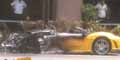
Fiery end to a $900K Ferrari

By Low Wei Xiang

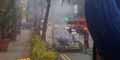
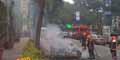
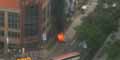
AN INFERNO caught the attention of those near the junction of Stamford Road and Victoria Street yesterday.

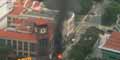
Click on thumbnails below to view more photos. Story continues after photos. (Photos: Stomp)    

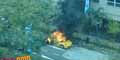
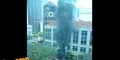
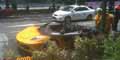
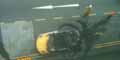
A yellow Ferrari F430 Spider convertible, worth an estimated $900,000 burst into flames around noon, according to witnesses.

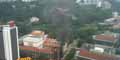
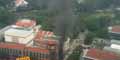
A Stomp contributor, who goes by the name of Peter, was surprised to see a thick plume of black smoke outside the window of his third-floor office at Stamford Court yesterday.

The 30-year-old, who works in the manufacturing industry, told my paper: 'The smoke was higher than my office building.'

One of Peter's colleagues, who declined to be identified, took photos of the scene and posted them online.

According to the colleague, an acquaintance owned the car.

The colleague said the vehicle's driver 'knew the car was going to explode' but did not have time to 'park behind the building'.

The driver evacuated the vehicle and fled the scene, said the colleague.

When contacted, the Singapore Civil Defence Force (SCDF) said it received a call from a member of the public at 11.56am.

A fire engine reached the scene by 12.05pm and the fire was put out within 10 minutes.

Witnesses whom the police spoke to could not identify the missing driver.

An SCDF spokesman said nobody was injured, and the cause of the fire was under investigation.

He added that the SCDF has seen an average of six cars catching fire each month in the past six months.

weixiang@sph.com.sg

For more my paper stories click here.