Thursday, December 31, 2009

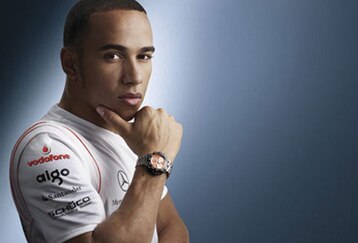
Hamilton Not Perfect But He Will Be One Day

Rackmultipart

Hi

I have written articles before about various things and some have had included Lewis Hamilton and they have not always been glowing in praise. I never intended the articles to be overly critical but a few people who I assume are hardcore Hamilton fans were very aggressive in their defence of him.

However, because of the fact I was never fully concentrating on Hamilton I never fully explained some of the views I portrayed. So I decided that I would fully explain what I have said and hopefully recieve less of the harsh criticism.

First of all Lewis Hamilton is a brilliant driver. No one in their right mind can deny what a good driver he is. Hamilton on his day could beat most people that have ever sat in a F1 car. Now that last sentence was key. He could beat MOST people. I do not believe he is the greatest F1 driver that has ever been in a F1 car.

His performance this year was I think in my view his most impressive. He really did show some true grit and determination in 2009 that really earned some respect from even his most fiersome critics of which I am not. He threw around what has to be one of the worst cars Mclaren have ever produced and managed to get it to do something and produced a very good season with tools at his disposal. This year he really began to show that legendary status could be his one day.

So far if we are honest he has not done quite enough yet to deserve the status of legend. He has not won enough titles for one thing which obviously is not his fault you cant win 5 or 6 world titles when you have been in the sport for just three years. To be legend you have to not only win the title once you have to be a multiple world champion. I fully expect him to win more titles.

Another thing needed to be classed as a legend is the memorable drive. The drive that will go down in history and will never be forgotten. Schumacher in Hungary in 1998 when he and Ross Brawn pulled off one of the most remarkable drives he have had to seemingly win from nowhere.

Senna in Donington in 1993 pulled around a car that wasn't the best car in the field by far to win after passing 5 cars in just one lap. Nuvolari in 1935 produced possibly the greatest drive in history when we won at the Nurburgring with a car that was old so therefore not the best handling car in the field and had roughly 110 HP less than others in the field. He won the race by around two minutes infront of the more powerful and newer cars.

He have yet to see one of those drives yet from Hamilton. He has had some very good performances especially in the wet for example at the 2007 Japanese grand prix and the 2008 British grand prix. However he needs that one performance where he pulls of the seemingly impossible that will go down in folklore. However that success is another reason why he has not quite earned legend status.

He had the best car in the field the Ferrari really wasn't quite up to the mark that year and therefore they should of been no concern. After a while it was clear that Alonso was not happy at Mclaren and he was going to move. Surely, the team would slightly albeit probably unintentionally supporting Lewis more. He just needed maintain they way he was going and the title would be his and he well, blew it. He really should of never ever let Ferrari back into the hunt and they did and well they didn't need asking twice.

However what no one again can deny is his true ability. He started his career in the best possible fashion in the best car and producing pdium performances race after race and then at Canada to win his first race. Hamilton because of those performances does deserve a special place in the history of F1. Hamilton was in 2009 the best driver on the grid and by a long way.

He also has the habit of surrounding himself in controversy. If you look back at all the races and you think how many times Lewis has found himself in trouble. It's a worryingly high amount. Lets start with one of the less controversial ones which would be the 2008 Japanese GP. He produced a quite simply ridiculous attempt at a pass which resulted in him clattering into Raikkonen and Kovaleinen. It was the first corner on the first lap and it was completly uneeded. He was rightly penalised it was a very bad error.

Then we think about the 2008 Belgian GP which is still disputed now. The chicane cutting incident was in my view a error by a Lewis and the stewards. Lewis has a bit stupid because he simply didn't drop back enough you can't just let them infront by as little as he did and then immeadiatly attack again. It was a silly error and nothing more. The penalty was simply not deserved. In France in 2008 yet again a silly error ensured once again he was penalised for cutting the chicane. 

He also gave us one of the comedy moments in F1 where I simply couldn't help but laugh. I am of course refering to the 2008 Canadian GP where he forgot about traffic lights. In the pits the lights where red so Raikkonen stopped as your meant to do. Hamilton didn't see the light or wasn't fully concentrating or whatever reason he continued merrily towards Raikkonen untill eventually he realised but by now it was to late and he simply slide in to the back of Raikkonen and his and Kimi's race was over.

But of course I am just here picking up on the errors of Hamilton. His driving is normally spectacularly good and f coruse he will make mistakes he is not perfect and no one is. He hasn't atleast got involved in some very underhanded sort of things such as Schumacher in Jerez and Senna in Suzuka.

Of course, he has been involved in controversy with spygate and the farce of the Austrailian GP 2009 but on neither of those occasions was Hamilton really at fault as far as we know. Aswell as this Lewis is absolutly brillaint with the media. He got the media on his side early on and apart from when he has had his little run ins with the stewards when they have criticized him they have been nearly universal in their praise.

Lewis is becoming less and less involved with the stewards and that can only be a good thing. The less he is involved with the stewards the better it will be for them. He is becoming wiser and as he does this it will benefit him more on and off the track. As we gets wiser that combined with his undoubted natural speed will result in one of the most rounded drivers we have ever seen.   

Lewis Hamilton has made mistakes in his F1 career and some of his fans really do need to accept this. I am a little tired of some of his fans trying to make out that he is perfect because of course he isn't as no one is. What Lewis Hamilton is a diamond still in the rough. He is not the finished article just but he is still brilliantly good. One day he will be the finished article and we could have a second era of Schumacher style dominance.

Hope I have explained myself and am fully prepared for Hamilton fans still to have a go at me

This was...

The Trivium Fan


Home » Blogs » Farewell 2009: A Few Disappointments, and Looking Toward Next Year

The Ford Taurus SHO was another disappointment. Blame the weight of expectations - and, perhaps, the portly 4405 lbs it carried -- but against cars like the Cadillac CTS-V, the SHO felt more like a quietly competent full-size sedan than a ball-tearing bitumen burner. Honda's loud and flimsy Insight seemed an unduly cheap and cynical effort from a company usually more engineering-led, as did Mercedes-Benz's disappointingly ordinary E550 Coupe. Both cars were based on hardware from a segment below (the Insight on the Fit, and the E550 Coupe on the C-Class), and it showed. The Ferrari California: why, why, why, oh why did it have to look like that?The great thing about this business is there's always the promise of next year, and new cars that will be better, faster, more stylish, more interesting than last year's offerings. So what cars do I most want to drive in 2010? Here's the short list: Aston Martin Rapide -- will it be a true four seat GT, or just a glamorous show-pony? Bentley Mulsanne -- it has a turbocharged pushrod 6.75-liter V-8 because, well, that's what traditional Bentleys have had for the past 20 years. But will that be a reason to own it? 2011 Buick Regal -- will this be the breakthrough Euro-style, American branded car that banishes the ghost of Merkur forever? And will it make Buick relevant to buyers under 60 again?2011 Cadillac CTS-V Coupe -- the current CTS-V is one of the greatest American sedans ever built; can Caddy repeat the magic with the Coupe? Chevrolet Volt -- it's conceptually the most interesting car from GM since the Corvair, but will it really work, and will America get it? Ferrari 458 Italia -- it's the most exciting new Ferrari since the Enzo; you need to ask why I want to drive it? 2011 Ford Mustang -- will the new 412-hp V-8 and 305-hp V-6 engines comprehensively crush Camaro? McLaren MP4-12C -- can it beat Ferrari and Lamborghini out of the box? Yes, it's going to be an interesting year, and I hope you'll come along for the ride. Happy New Year.


Top 10 SuperCars of 2009

ferrari 458 italia 01 100x100 Top 10 SuperCars of 2009 ferrari 458 italia 020 100x100 Top 10 SuperCars of 2009 ferrari 458 italia 030 100x100 Top 10 SuperCars of 2009 ferrari 458 italia 040 100x100 Top 10 SuperCars of 2009 ferrari 458 italia 050 100x100 Top 10 SuperCars of 2009 ferrari 458 italia 060 100x100 Top 10 SuperCars of 2009

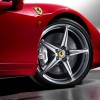
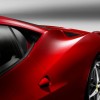
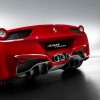
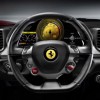
A massive leap forward from the Prancing Horse’s previous mid-rear engined super cars, the new Ferrari 458 Italia model is a synthesis of creative flair, style, passion and cutting-edge technology, all characteristics for which the Italians are known. And, it is to reflect the conjoining of character with practice (or pragmatism) that Ferrari decided to add the name of their homeland to their latest super car. The 458 Italia is an entirely new car from every point of view: design, aerodynamics, engine, handling, ergonomics and instrumentation. The new 4499 cc V8 engine is the first mid-rear mounted, direct-injection engine from Ferrari. Equipped with a traditional flat-plane crankshaft, the V8 engine delivers an impressive 570 bhp at 9000 rpm. With a power output of 127 bhp/litre it sets a new benchmark not only for the entire Ferrari range, but also for the whole market segment. A maximum torque of 540 Nm is achieved at 6000 rpm, and about 80 percent of it is available from 3250 rpm onwards. However, the truly extraordinary feature of the 458 is the amount of torque available at low revolutions, while maintaining high levels of power. A dual-clutch 7-speed transmission is just one of the several key features the 458 introduces into the model range. The 458 Italia has a top speed in excess of 203 mph (325 km/h) and accelerates from 0 to 60 mph in a mere 3.3 seconds.

Price: $255,000

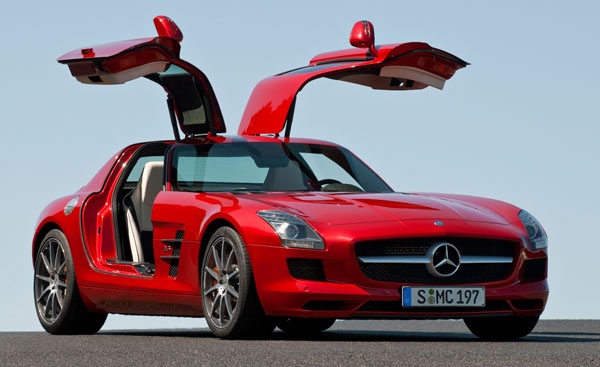
Mercedes Benz SLS AMG

2011 mercedes benz sls amg 0301 Top 10 SuperCars of 2009

Best From a Decade That Changed the Auto Industry

<< previous image | next image >>


It’s hard to believe just 10 years ago automakers were working double-time to churn out the biggest SUVs consumers could stuff into their garages. Bigger was better, fuel economy be damned. Why worry when gas was less than a buck-and-a-half a gallon and few people knew about, let alone cared about, global warming?

Now, at the end of the first decade of the 21st century, everything has changed. The realities of volatile fuel prices, global climate change and a worldwide economic slowdown brought some of the biggest automakers to their knees. The auto industry is in the midst of its biggest change in decades. It’s long overdue.

Hybrids are hot, automakers have rediscovered electric cars and everyone’s promising us cleaner, greener cars. We’re even seeing Americans starting to give diesels the respect they deserve. Oh, sure, automakers still build a lot of big, powerful vehicles. They always have and always will. But you know the rules have changes when even Porsche and Ferrari are developing hybrids.

We’re on the cusp of a new chapter for the auto industry. It’s an exciting time to be a gearhead, because we’ll see more change in the next 10 years than we’ve seen in the last 50. As that chapter opens, we take a look back at 10 cars that moved the auto industry forward during the past decade. They’re listed in chronological order.

Above: Audi TT (2003)

The Audi TT first debuted as a concept in 1995 and for the next eight years existed as a tomboyish kid sister to the A4 and A6. It wasn’t particularly fast — a mere 178 horses from the base 1.8 liter four-cylinder engine — and it gained a reputation as a car that offered more show than go.

In 2003, the TT made history when it became the first production car sold worldwide to offer what Audi called the Direct Shift Gearbox — an electronically-controlled manual transmission with dual clutches that outsmarted even the most seasoned drivers. One clutch controls first, third, fifth and reverse while the other handles second, fourth and sixth. That allows for seamless, 0.2 second shifts, since up- and downshifts are “pre-loaded” even while the transmission remains in gear.

Sure, Citroen invented the technology back in the ’30s and Porsche tried it on the track in the ’80s, but advances in computing made a production version possible in time to revitalize the TT. When it debuted, Car and Driver said the DSG “will soon become the transmission of choice across a broad swath of the automotive landscape.” Today, nearly every car in the Volkswagen Group lineup has one as an option, and dual clutch transmissions are cropping up on Hyundai concepts and Ford subcompacts.

Photo: Audi

Pages:

Cars to look out for in 2010

52audi311209.jpg
The A1 will be Audi's smallest car when the covers are pulled from it at the Geneva show in March. We'll see the car in our showrooms in October where it will be taking the fight to the Mini. It's based on the VW Polo but posher and will cost upwards of around £14k. Only available as a three-door.

Bentley Mulsanne
52bentleymulsan311209.jpg
A new Bentley, what ho! The Mulsanne is a welcome step forward with a completely new 6.75-litre, V8 engine that's got nothing to do with the old Arnage's V8 (which goes back to 1959). She'll cost £200k this May.

Chevrolet Spark
52spark311209.jpg
Chevrolet means two things: outrageous muscle cars and cheap family motors. In the latter department the new Spark arrives in March - a five-door city car with prices starting at £6,000. Aimed at younger drivers with a spec to suit. Bound to be a big seller.

Honda CR-Z
52honda311209.jpg
I thought this car was coming last year but obviously it's a bit late. It'll be worth the wait though because it's the first affordable yet interesting hybrid car. It certainly looks cool. The price will be around £18,000 but we've still not been told about all the oily bits under the skin. We'll find out in April.

Kia Venga
52venga311209.jpg
Not quite as sexy as a new Ferrari but the Kia Venga is rather more real world. A rival to the Nissan Note and Vauxhall Meriva, with a flexible and spacious five-seat cabin, it comes with Kia's usual competitive pricing and an amazing seven-year warranty. It's fairly sure to attack its rivals with a vengeance.

McLaren MP4-12C
52mclaren311209.jpg
If we're lucky, the new McLaren road-going supercar might arrive before the end of the year. It'll cost about £160k and will be powered by a 500bhp V8. With Button and Hamilton in its F1 team, this new car could play a blinder for the boys and girls from Woking.

Mercedes-Benz SLS AMG
52merc311209.jpg
Another sexy beast that we've talked a lot about. The magnificent Merc SLS arrives in time for summer at about £155k. Of course, we'll all call it the Gullwing because of its upwards-opening doors.

Volvo S60
52volvo311209.jpg
After what seems like five years of teaser piccies, the new Volvo S60 goes on sale in July from £21k. Volvo assures us it'll be fun to drive.

Alfa Romeo Giulietta
52alfa311209.jpg
Last year the new Alfa was the little Mito and we rather liked it. Very well-priced, cute looks and fun to drive. Now on its way is the car that replaces the 147 hatchback. It's called the Giulietta and is a sharp-looking motor. It should be good value, too. Available as a five-door, in the spring.

Aston Martin Cygnet
52cygnet311209.jpg
If you fancy spending £25,000 on a £10,000 Toyota iQ then the Aston Martin Cygnet is for you. The Cygnet is a tarted-up Toyota that has Aston styling features. You'd have to be mad to buy one. But the pint-sized poser arrives in September.

BMW 5 Series
52bmw311209.jpg
A new generation of 5 Series arrives in April. Bigger than the current one, the new Five comes in high spec - all models come standard with lots of leather. Expect two things: EfficientDynamics gizmos and a strong order book.

Citroen DS3
52citroen311209.jpg
Someone should drug-test Citroen's designers because their performance has been remarkable over the past 12 months. In March, the new DS3 will arrive and I can't wait. It's as smart and posh as the Mini. Prices from £12,500.

Ferrari 458 Italia
52ferrari311209.jpg
Let me at it! A "small" Ferrari with a 9,000rpm 562bhp V8 engine, 202mph top speed, seven-speed twin-clutch gearbox and race-car handling. Doesn't look too shabby, either. What's not to like - apart from the £160k price tag?

Jaguar XJ
52jaguar311209.jpg
This is the first Jaguar XJ saloon that doesn't look exactly like the original '68 XJ. It's certainly going to turn heads. Prices for the new Jag start at £50,000. It's big but thanks to the use of aluminium it's extremely light - only 1,650kg. It's posher inside, too.

Mini Crossman

Formula One in the noughties

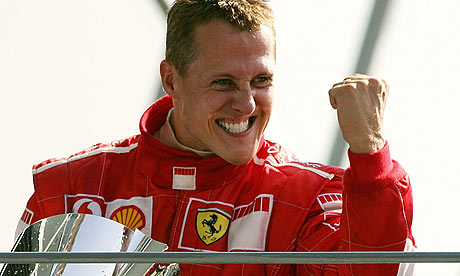
Michael Schumacher celebrates after winning the Italian grand prix in 2006

Michael Schumacher celebrates after winning the Italian grand prix in 2006. Photograph: Patrick Hertzog/AFP/Getty Images

How it changed for the better Judging by the past two years alone, Formula One has never been more competitive, with two seconds covering the entire grid, as opposed to five seconds a decade ago.

How it changed for the worse The cars may be closer, but they can't overtake. The sophisticated aerodynamics and technology - while also having positive effects - mean the cars cannot run in close company and braking distances are too short. Added to which the characterless, standard F1-commissioned circuits issued to every new track – Shanghai, Bahrain, to name two – minimise overtaking and look boring.

Decade's top five

1 Ferrari The combination of Ross Brawn and Michael Schumacher and five championships in succession proved why F1 would be much poorer without the charismatic Italian team.

2 McLaren Bland but memorable for consistent excellence and the ability to overcome massive setbacks.

3 Renault Regrouped to become a powerful, colourful force capable of defeating Ferrari in the middle of the decade.

4 Williams Despite not winning a championship since 1997 or a race since 2004, remain a stalwart of stoutly British independence (or as near as you can get these days).

5 Brawn We will never see the like again, not because it was in existence for just one year but because of the remarkable achievement from bust to boom in 2009.

Race of the decade Indianapolis 2005, when only six cars started the US grand prix after 14 withdrew at the last minute. A shocking example of how to insult the paying spectator by allowing political agendas to dominate. First public proof that Max Mosley couldn't give a stuff about the core values his presidency of the FIA was supposed to take care of.

Most memorable moment Melbourne 2007 and on the first corner of the first grand prix Lewis Hamilton runs round the outside of former world champions 200 metres into his F1 debut. First exciting sign of a new megastar.

2020 vision Bernie Ecclestone will be 89 and unlikely to be in control – but you never know with this human dynamo. His absence, whenever it comes, will create a messy vacuum lasting at least a year as several people attempt to do the job of one man. A dictatorship in F1 had its advantages but the moment has passed. Ecclestone's departure will help F1 rid itself of the insular, unhelpful attitude that embraces making money at the expense of the people who really matter: the race fans.

To read our experts' reviews of the decade in other sports, go here.

Best of the Noughties

As the decade comes to a close Andrew Davies asks who was the best driver, what was the best car, who was the best team boss, and what was the saddest loss in the first decade of the 21st Century?

Driver - Michael Schumacher

Not the toughest decision in the world, this. Schumacher was at his consumate best in the Noughties. The only person who came close is Fernando Alonso and it's appropriate that he should be the new talismanic figure to take Ferrari forward into the new era of resource restriction. Who would win in a head-to-head? Schumacher of course. You can't imagine Michael letting a rookie beat him in 2007.

Car - The Ferrari F2002 of 2002

The Ferrari F2002 of 2002 was the car of the decade and in the hands of Rubens Barrichello and Michael Schumacher totally eclipsed the opposition. It mustered 221 points against the nearest challenger Williams' 92 points. A decade earlier Williams had produced the all-conquering FW14B for Nigel Mansell and the season became as boring as a post-race interview with Our Noige/ Il Leone. But still the greatest moustache-wearing F1 driver of all time.

Team Boss - Christian Horner

This is not an entirely results-based review. To borrow the parlance of every TV talent show; it's about the journey. Horner has emerged from being the boss of a F3000 team (that he formed and drove for at the age of 24) to a GP2 team, to the boss of Red Bull in 2006. He has steered the shell of the old Stewart/Jaguar team to becoming regular winners and potential World Championship winners. Adrian Newey's preference to work for Red Bull over McLaren can be partly put down to Horner's relaxed leadership style. No tight-lipped pitlane utterances from Horner who is refreshingly upbeat even when he loses.

Scandal - Singapore Crashgate

It happened in 2008, but the full consequences have yet to be played out. We're still waiting to hear the verdict on Flavio Briatore's appeal and there might be a couple of chapters to write after that. Though McLaren spygate was big in terms of the cash fine, we've had spying scandals throughout F1 history. Nobody has ever tried so blatantly - and you have to say, so expertly - at manipulating a race result.

Survivor - Frank Williams

In one of F1's most tumultuous decades, Frank Williams has kept his independent F1 team together. You have to wonder if BMW might still be in the sport if they had stuck with Williams all the way, but hey, they knew best. Last season, Williams almost beat both Renault and BMW on what would have been half the budget. We have lost Giancarlo Minardi, Paul Stoddart, Eddie Jordan and we almost lost Peter Sauber, so to lose Frank and Patrick would not be good. He has stuck rigidly to the rulebook and may not have made too many friends in Maranello or Place de la Concorde over the last ten years, but he's still there.

Race - 2008 Brazil GP

The season-ending Brazilian GP of 2008 will probably go down as the nerve-jangling F1 race of all time, let alone the last decade. We had bucket loads of drama that played out in an almost Hollywood-scripted finale where Lewis Hamilton looked like winning, then losing his World Championship and then gaining it back with two corners to go. In fact because America knows so little about F1 they could still run it and few would know the ending of the cliffhanger that was Massa vs Hamilton. Denzel Washington would play Lewis Hamilton, Antonio Banderas could play Massa and the part of Ron Dennis would be played by Graham Norton.

Crash - Robert Kubica at the Canadian GP in June 2007

Jarno Trulli was busy pushing Kubica out wide as they approached the best part on the circuit to overtake, the casino hairpin. The only problem was that Kubica was already out there and had no place left to go except the grass verge - then FLIP! There is a fantastic image of the car airborn with only one wheel visible looking like a BMW-Sauber flying saucer hovering over the track - albeit a flying saucer that's been very badly built and is shedding a lot of parts. Kubica was lucky to walk away from the accident uninjured, it was a spectacular crash. The following year he won the race.

Saddest loss - Imola

Not a person, this time, but a circuit. Imola was never suited to overtaking in the modern era and sadly there was no money or political will to update it. As a child growing up and watching open-mouthed at the Villeneuve vs Pironi battle, the rolling Italian landscape seemed the perfect home for F1 racing. Now we have to put up with Tilke-designed clones run through ports, deserts, barren hillsides and reclaimed marshland.

Best New Track - Istanbul

Given that F1 only had one circuit designer to call on the choice isn't huge. Hermann Tilke did his best work in Turkey, unsurprisingly where there is a lot of rise and fall to the track. The first turn is tricky (supposedly Bernie inspired, though you'd think he'd want a turn in the shape of a $), the final chicane complex has seen some great overtaking, but it is the quadruple apex Turn 8 that has challenged all the F1 drivers who've tackled it.

Best Decision - Qualifying changes

To get rid of single lap qualifying and introduce the new three-session format. The hurly burly of Qualy 1 is only going to get even more hurly and even more burly in 2010 with 26 cars on track and eight being eliminated.

Worst Decision - Honda's exit

Honda quit F1 when they were on the brink of greatness. They were also on the brink of punting their great rivals Toyota into the long grass. Hindsight's a wonderful thing. There was no tapping progress on the shoulder and saying "more forward please".

What do you think of our choices? Let us know using the form below

Wednesday, December 30, 2009

Ingram's Flat Spot On: US F1 will be ready

Ingram's Flat Spot On: US F1 will be ready Racing series   F1 COMMENTARY Date 2009-12-30

By Jonathan Ingram - Motorsport.com

Ingram's Flat Spot On by Jonathan Ingram

US F1 Will Be Ready

This just in from Europe: America's new Formula One team may not make it to the grid in Bahrain next March to open the 2010 season.

Yawn.

There never seems to be enough of the usual scandal, Machiavellian machinations, Flavio factoids and Bernie bits to fulfill the demands for the latest word in F1. Schumacher officially returns one day, the US and Spain won't send cars to Bahrain the next. It's all on the same scale of ultra-drama according to the news mavens and havens of F1.

Even one Bernard Charles Ecclestone has gotten into what has been a long-playing act. Like any run-of-the-mill politician, the man in charge of commercial rights for F1 is hedging the bet on new blood arriving in F1. Some will make it, he says, some may not.

The flatfoots down the street from Fleet, who are also in the business of hedging bets from time to time when it comes to future events, have smoked out the details. The US F1 and Campos teams are the ones Ecclestone is worried about, they say.

Hmmmm.

Should any of the four new teams not make it -- which is anybody's guess at this moment -- then Ecclestone will have defused the story of F1's new era falling on its face, at least in Round 1 at Bahrain. (Following the departure of former FIA president Max Mosley, the concept of cost-effective F1 racing now belongs to Ecclestone.)

All this time, I thought the realm of F1 was so sophisticated. Instead, the upper crust and the insiders are falling all over one another to ply the prejudices of the proles and everyday punters who buy the majority of tickets and are the largest category of TV viewers around the world. The Yanks and the Spaniards may not show up after all. Funny how the new British-built entries like Virgin F1 and Lotus are left out of the speculations, eh?

Sorry. These are reliable news reports, not speculations. There have been hordes of paparazzi, snoops, mountebanks, soldiers of fortune and second story men secretly flying into the airport on Billy Graham Parkway in Charlotte to scope out the facilities and operations at the headquarters of US F1. After combing through the trash bins outside the team's facility for shards of carbon fiber evidence and finding none, they've gone on to discover that the technology of NASCAR Valley is all a big hoax. It's still a bunch of lintheads putting cars together with tube frames and tobacco juice while running a little 'shine on the side.

Meanwhile, back in Italy, the current sophistry concerns Michael Schumacher's twin. To keep the tifosi, i.e. the Italian proles and punters, from turning angry rage upon the national team at Ferrari, Luca di Montezemolo has declared Schumacher to be of two minds about competing in F1 or staying with Ferrari as a figurehead. The seven-time champion (including five straight at Ferrari) may drive for Mercedes, said Montezemolo, but Ferrari will be in his heart.

Now that's some serious hedging. (There seems to be a theme here: don't blame me, says the domo, I'm merely in charge.)

At least there's been some seriously funny stuff, too, on the Internet recently when it comes to the next American F1 entry being produced in Charlotte. Take, for example, the cartoon of a Sprint Cup car with an F1 machine drawn on the doors and quarterpanels, representing the first known sighting of US F1's new car.

Speaking only for myself, I'm not sure I would swear on the soul of Billy Graham that everybody signed up for the grid in Bahrain will be on the grid in Bahrain. My twin, on the other hand, has seen the new video at US F1.com and he says... .

E-mail of the week: My friend Tom Schultz dropped off this missive on the subject of Jimmie Johnson's four straight NASCAR championships being the story of the year -- and of the decade.

"Come on now, you have to be kidding? Jimmy Johnson winning four straight the top story of the decade? Good grief. Have you forgotten Michael Schumacher winning five straight World Championships, and at a much higher level? Not to mention that under a more legitimate scoring system, not the contrived, show biz 'chase' system, Johnson would have won but two.

"Many other stories would qualify for best of the decade (even though the decade has one year to go). Castroneves winning Indy three times, the long decline and eventual folding of CART/Champ Car as Tony George wins a war far more protracted than he imagined, the sudden revolt in the Hulman-George family with Tony being thrown out, the peaking and start of the decline of NASCAR, and so on.

"As far as the story of the year, I have no doubts in my mind. The totally unprecedented and unexpected triumph of Brawn GP in the World Championship. Couple that to the fact that of the 17 World Championship Grand Prixs, only three were won by teams that have won before, while an astounding eight were taken by Brawn and six by Red Bull. Totally unexpected, unprecedented, and astonishing. That dwarfs by far any activity in the WWF on wheels here in the U.S."

Thanks man -- and next time let me know how you really see it. From the perspective here, Schumacher usually only had to beat his teammates during his championship skein at Ferrari and, well, words escape me on that subject.

As for Brawn GP, I'd put Ferrari and McLaren running the entire season with KERS -- and winning -- ahead of that story.

As for the decade, yes, more to come. I still think Johnson will win a fifth straight title and that the Chase format is more difficult to win, not easier.

See yaw! ...At the races.

Jonathan Ingram can be reached at jonathan@jingrambooks.com


Discuss this article in the Motorsport.com Forums channel: F1

Formula 1 Once Again Told to Go Green(er)

renault_f1_abu_dhabi

Meet the new boss, same as the old boss. Jean Todt, the freshly minted head of the Federation Intenationale de l’Automobile, wants to make Formula 1 racing cheaper and greener, and he’s telling team bosses to step up or he will.

Now where have we heard this before?

Oh, that’s right. Max Mosely, Todt’s predecessor as head of auto racing’s sanctioning body. He was fanatical about cutting costs and emissions and firmly believed Formula 1 ought to lead the way to a cleaner, greener motoring future. He wasn’t afraid to be dictatorial about it, either.

Although it might seem Todt is simply continuing what could be called the Mosely Doctrine, it doesn’t mean that what Todt is trying to accomplish isn’t the smart move.

As much as we love F1, it isn’t the most environmentally friendly endeavor. With governments around the world at least paying lip service to cutting greenhouse gas emissions, how long do you think it will be before someone looks at motorsports and decides to start regulating it heavily? Besides — F1 is the pinnacle of automotive engineering, the place where new technology can be developed quickly. We’re already seeing this in endurance racing, particularly the American Le Mans Series, which is embracing everything from algal fuel to hybrid drivetrains. F1 should do the same.

Todt agrees.

“I am convinced that we absolutely must reflect the environment with new technologies. We must adapt to our time and review fundamentally motorsport - even create new disciplines,” he said, according to the BBC.

Joining Todt at the FIA to lead the project is former Ferrari F1 engine boss Gilles Simon. Todt feels F1 needs to push ahead on new green incentives, particularly after abandoning the kinetic energy recovery systems some of the teams experimented with during the last season.

“After the decision by the teams to abandon KERS, there will be nothing innovative in F1 next year. I think that’s a pity,” Todt said, according to ITV. “I have therefore decided to create a working group, which will involve our environment and alternative energy commissions. It’s a team effort, and I expect people to come forward with proposals in this area and on how to improve the show.”

“If not, then the FIA will act,” Todt added ominously. Sounds to us like Todt is prepared to act unilaterally if he doesn’t think the teams are stepping up. ESPN reports that Todt thinks Mosley didn’t go far enough, particularly with regard to reining in F1’s stratospheric costs.

“The F1 teams are sometimes blind and do not realize what is happening in the world,” Todt said. “But the racing has been struck as always by the [economic] crisis. F1 is too expensive, and my predecessor Max Mosley made great efforts to reduce costs, but it was not enough, especially as some teams were resistant.”

Some teams were resistant, but now, some teams, or at least some former team bosses, appear to be supporting Todt.

“First we have to decide where we want to position the product,” Ferrari President Luca di Montezemolo had this to say n a separate interview. “I think it needs to encompass extreme technology, performance and research. Secondly, we need to save costs without losing the appealing elements. Carbon brakes, for instance, are impossible to use with road cars and we can accept a standard gearbox without losing F1 characteristics. Thirdly, to replace manufacturer teams with teams that I don’t know if they will be ready or in what condition, I don’t think is best.”

Or, as Todt succinctly said, “Automobile sport must adapt to its time.”

Photo: Renault F1

Report: Hybrid Ferrari 599 Headed to Geneva Auto Show

Report: Hybrid Ferrari 599 Headed to Geneva Auto Show

2009-ferrari-599-03

While Ferrari has claimed hybrid F-Cars are several years off, a recent report suggests that a hybrid version of the company’s 599 GTB flagship will debut at the Geneva Auto Show in March. This hybrid will likely be performance based and use a kinetic energy recovery system (KERS) setup similar to the ones designed for Formula One.

The 599 Hybrid will use a lithium-ion battery pack with electric motors built into the rear transaxle. This setup would allow for regenerative braking, a start-stop function and an electric boost capability to add even more acceleration to the 599’s already impressive 620-hp V12 engine. Under city driving it would also help improve mileage by 30 percent. That will be particularly noticeable on such a gas-hungry beast as the 599, which currently only gets 8.7 mpg, bringing it up to 13.8 mpg.

See our review of the old school gasoline-powered 599 GTB below:

Ferrari 599 GTB Fiorano Review

[Source: Quattroruote]

Jay Leno hits road in new McLaren MP4-12C

The Big Mouth meets the Big Mac! In an amazing world exclusive, Auto Express was on hand to witness US TV chat show host and car collector, Jay Leno, hit the road in the machine every supercar fan is desperate to climb aboard: the McLaren MP4-12C.The first of a new line-up of road models from the famous racing outfit, it follows in the wheeltracks of the legendary F1. And it will go up against the Ferrari 458 Italia when it reaches showrooms in 2011. We joined Leno at the Dunsfold test track in Surrey, where engineers were putting MP4-12C prototypes through their paces. Leno got the offer of a ride on two accounts. For starters, he’s interested in one of the new models. Secondly, a trip here is a rare thing for him. He was last in the UK 10 years ago, and that was also for a visit to McLaren’s HQ in Woking, Surrey – when he bought an F1 road car. “I thought it was quite an honour to be given this chance. It was a real thrill,” said Jay at the windy airfield perimeter track. “If you are a soccer fan, it’s like being asked to play with Manchester United. “So when you are with your car friends and they say ‘I wonder what this new McLaren is like’, you are able to tell them you were in it – and at that point, the conversation just stops!” The MP4-12C is a real technological tour de force. It has a 600bhp 3.8-litre twin-turbocharged V8 engine, while its carbon fibre chassis weighs only 80kg. Other highlights range from a seven-speed twin-clutch gearbox to double wishbone suspension with adjustable dampers. Driver aids include brake steer, which applies the inside rear brake as the car corners, to aid turning.

After getting a tour of the factory with McLaren Automotive boss Antony Sheriff, Leno was taken to a secret viewing room to see the car, which still bears an early version of the nose. “I like the proportions,” he said. “Too many road cars now are big and wide. It’s better looking than the Ferrari, and I think it has a unique pedigree. Everybody knows Ferrari; only real enthusiasts know McLaren.”The icing on the cake for Leno was the chance of a chauffeur ride with factory test driver, Chris Goodwin. “He told me the camouflaged prototype car was in the middle of its development programme, and that they were honing its ride and handling,” explained Jay. “Apparently, Dunsfold is good as it has loads of different corners. It’s bumpy, fast and slow, with lots of changes of direction.” Leno then strapped himself into the cockpit – and with a thumbs-up, he disappeared in a blur as Goodwin planted the throttle and lit up the tyres.For an hour, first in the dry and then, after a thunderstorm, in the wet, Leno and Goodwin lapped Dunsfold at full speed. Leno doesn’t normally make a good passenger, but in the McLaren it’s the best seat in the house. Plus, this is the closest anyone outside the firm will get to the new car for months to come. Jay grinned uncontrollably as he was brought to a halt and climbed out. “From the passenger seat, it feels amazing!” he reported. “It’s obviously not a finished car, but acceleration is extremely strong and the engine revs to 9,000rpm. “The gearbox shifts very quickly, too – certainly faster than a human could shift. It’s all a sensory overload, but not in any sort of scary way. “This is the first car that has forced me to accept that paddleshift is the future. I much prefer a mechanical gearchange – like a mechanical watch. But Chris Goodwin’s changes were sublimely smooth and fast.”The car Leno rode in is stripped bare and crammed with test equipment. But he still assured us that it’s a great place in which to spend time, with the two-seater offering lots of space, despite having one less seat than his McLaren F1.“Visibility is good,” he added. “It’s a modern, practical car – not a dream machine that you couldn’t live with. It appears to have good ground clearance, so you should be able to use it in most places. From inside, the sound was snarly but pleasant. Any time you have twin turbos you get a bit of a muted sound.”The greatest compliment Leno paid to the 12C was by comparing it to a model from one of Britain’s greatest auto brands: Lotus. “It felt like the kind of car [Lotus founder] Colin Chapman would have made if he was still alive,” he said. “Only when you’re on the move do you sense how light it is. Yes, it has a carbon fibre tub and the lightest technology out there, but that lightness really translates to the road. “It felt nimble, precise and accurate – all the things a Lotus is famous for, but in a package that is uniquely McLaren. I love the fact they have fought to get the car under 1,400kg. It’s a revelation in this day and age.”

Best of the Noughties

As the decade comes to a close Andrew Davies asks who was the best driver, what was the best car, who was the best team boss, and what was the saddest loss in the first decade of the twenty-first century?

Driver of the Decade: Michael Schumacher. Not the toughest decision in the world, this. Schumacher was at his consumate best in the Noughties. The only person who came close is Fernando Alonso and it's appropriate that he should be the new talismanic figure to take Ferrari forward into the new era of resource restriction. Who would win in a head-to-head? Schumacher of course. You can't imagine Michael letting a rookie beat him in 2007.

Car of the Decade: The Ferrari F2002 of 2002 was the car of the decade and in the hands of Rubens Barrichello and Michael Schumacher totally eclipsed the opposition. It mustered 221 points against the nearest challenger Williams' 92 points. A decade earlier Williams had produced the all-conquering FW14B for Nigel Mansell and the season became as boring as a post-race interview with Our Noige/ Il Leone. But still the greatest moustache-wearing F1 driver of all time.

Team Boss of the Decade: Christian Horner. This is not an entirely results-based review. To borrow the parlance of every TV talent show; it's about the journey. Christian Horner has emerged from being the boss of a F3000 team (that he formed and drove for at the age of 24) to a GP2 team, to the boss of Red Bull in 2006. He has steered the shell of the old Stewart/Jaguar team to becoming regular winners and potential World Championship winners. Adrian Newey's preference to work for Red Bull over Mclaren can be partly put down to Horner's relaxed leadership style. No tight-lipped pitlane utterances from Horner who is refreshingly upbeat even when he loses.

Scandal of the Decade: Singapore Crashgate. It happened in 2008, but the full consequences have yet to be played out. We're still waiting to hear the verdict on Flav's appeal and there might be a couple of chapters to write after that. Though McLaren spygate was big in terms of the cash fine, we've had spying scandals throughout F1 history. Nobody has ever tried so blatantly - and you have to say, so expertly - at manipulating a race result.

Survivor of the Decade: Frank Williams. In one of F1's most tumultuous decades Frank Williams has kept his independent F1 team together. You have to wonder if BMW might still be in the sport if they had stuck with Williams all the way, but hey, they knew best. Last season Williams almost beat both Renault and BMW on what would have been half the budget. We have lost Giancarlo Minardi, Paul Stoddart, Eddie Jordan and we almost lost Peter Sauber, so to lose Frank and Patrick would not be good. He has stuck rigidly to the rulebook and may not have made too many friends in Maranello or Place de la Concorde over the last ten years, but he's still there.

Race of the Decade: 2008 Brazil GP. The season-ending Brazilian GP of 2008 will probably go down as the nerve-jangling F1 race of all time, let alone the last decade. We had bucket loads of drama that played out in an almost Hollywood-scripted finale where Lewis Hamilton looked like winning, then losing his World Championship and then gaining it back with two corners to go. In fact because America knows so little about F1 they could still run it and few would know the ending of the cliffhanger that was Massa vs Hamilton. Denzel Washington would play Lewis Hamilton, Antonio Banderas could play Massa and the part of Ron Dennis would be played by Graham Norton.

Crash of the Decade: Robert Kubica at the Canadian GP in June 2007. Jarno Trulli was busy pushing Kubica out wide as they approached the best part on the circuit to overtake, the casino hairpin. The only problem was that Kubica was already out there and had no place left to go except the grass verge - then FLIP! There is a fantastic image of the car airborn with only one wheel visible looking like a BMW-Sauber flying saucer hovering over the track - albeit a flying saucer that's been very badly built and is shedding a lot of parts. Kubica was lucky to walk away from the accident uninjured, it was a spectacular crash. The following year he won the race.

Most Sad Loss of the Decade: Not a person, this time, but a circuit. Imola was never suited to overtaking in the modern era and sadly there was no money or political will to update it. As a child growing up and watching open-mouthed at the Villeneuve vs Pironi battle, the rolling Italian landscape seemed the perfect home for F1 racing. Now we have to put up with Tilke-designed clones run through ports, deserts, barren hillsides and reclaimed marshland.

Best New Track of the Decade: Istanbul. Given that F1 only had one circuit designer to call on the choice isn't huge. Hermann Tilke did his best work in Turkey, unsurprisingly where there is a lot of rise and fall to the track. The first turn is tricky (supposedly Bernie inspired, though you'd think he'd want a turn in the shape of an $), the final chicane complex has seen some great overtaking, but it is the quadruple apex Turn 8 that has challenged all the F1 drivers who've tackled it.

Best Decision of the Decade: To get rid of single lap qualifying and introduce the new three-session format. The hurly burly of Qualy 1 is only going to get even more hurly and even more burly in 2010 with 26 cars on track and eight being eliminated.

Worst Decision of the Decade: Honda quit F1 when they were on the brink of greatness. They were also on the brink of punting their great rivals Toyota into the long grass. Hindsight's a wonderful thing. There was no tapping progress on the shoulder and saying "more forward please".

AD

You might want to try your own list for size on the forum - no space here for best overtaking move, best car-to-pits broadcast radio message (Montoya), best FIA interference (Michelingate), best TV ad featuring an F1 personality (Schumi's Shell commute) and best test-drive of a Honda Civic Type R.

Alfa Romeo Montreal – Reader Review

alfa m high side

CarAdvice reader Adam Davis was the recent winner of the limited edition book from Capricorn Link Australia, entitled Alfa Romeo Montreal – The dream car that came true. Here is his review on the car.

alfa montreal book

Without resorting to rose-tinted glasses, one can safely reflect upon the sixties as a wonderful decade for the automobile.  In North America, excess was everything as the muscle car concept was developed to its zenith – all 7 litre V8’s and tortured tyres as the baby boomers reached driving age.  Australian manufacturers, as ever taking the lead from their US parent companies, followed with their own locally developed V8 rockets.

Over in Europe, the introduction of soon-to-be icons such as the E-Type Jaguar showed that, as ever, style remained as important as substance.  Porsche was also busy, releasing the car by which they are still defined today in the 911.

But as if by right, it was the Italians that stole the show.  Ferrari were on top of their game as their legendary 250 series V12’s gave way to ever larger units, but ironically it was a disgruntled former Ferrari client that provided the inspiration for the world’s first supercar.  Ferruccio Lamborghini, a successful Italian industrialist then most famous for producing tractors, had become fed up with Ferrari unreliability and the diabolical service he received.  Whether his debut 350GT of 1963 was made purely out of spite towards Ferrari as opposed to making sound business sense remains a controversial issue even today.

Regardless, the timeless Bertone designed Lamborghini Miura that debuted in 1966 is considered the original supercar with its mid-mounted, hyperactive V12 and swooping, stealthy bodywork.

This high-end battle for European supremacy rubbed off on other Italian manufacturers.  Fiat did a deal that gave them access to the musical ‘Dino’ Ferrari V6 which was seen in their Dino coupe and Spider series- worldwide image boosters for the Fiat reputation.  Alfa Romeo, that other giant of the Italian automotive industry, was also seeking a flagship to bring the company in line with their vision for the next generation of sports cars.

Alfa M 1

The result was the emphatic Montreal.  The first two prototypes debuted at the centenary of the confederation of Canada, held in Montreal in 1967.  Designed at Bertone’s studio under the pen of Marcello Gandini (whose hand most famously directed the Miura’s curves) these concepts were mechanically based on the contemporary Alfa 105 series coupe and appeared on the stands sans identifying badge work.  Reaction from the public was impressive, and people began referring to the cars as ‘Montreals’.

alfa montreal reader side 1

Buoyed by the response, Alfa Romeo pressed ahead for a production run.  Unlike many concepts that become watered down when productionised, the Montreal instead grew into a true exotic, housing a street tuned derivation of Carlo Chiti’s Alfa 33 V8 sports car engine- though with few interchangeable parts.  Front-mounted, this all aluminium 2593cc masterpiece was dry-sumped and utilised 4 camshafts and mechanical fuel injection to produce 147kw @ 6500rpm with a torque peak of 235nm at 4750rpm.   These outputs were sent to the rear wheels via a 5-speed ZF gearbox with dog-leg first gear and a limited slip differential.  Its chassis and suspension were still based on the 105 series but suitably modified to handle the increased power- to keep costs down but also to make good use of the 105 chassis’ inherently sporting nature.

alfa m engine 2

The production Montreal was shown to the world at the Geneva show in 1970, some 3 years after the initial prototype display.  Little was changed externally and some cynics argued that it was too far delayed to still be relevant and saleable in a seventies market.  3925 were eventually produced to 1977, but were never released into the North American market from where it got its name- a legacy of more stringent North American emissions standards.

alfa m right side

The Montreal today

Alfa M in garage

Our feature Montreal has for the last 2 years been owned by Gary Pearce.  It is an original Australian delivered car with a genuine 55,000 miles recorded over a 35 year lifespan.  Its freshly polished green paintwork gleams Emerald in the sun as Gary gently warms the car through. The jewel like V8 smoothly whirs at idle, legacy of many hours carefully tuning the original Spica fuel injection system.

alfa m spiker

Initially, it is the looks that captivate.  Gandini’s flamboyant interpretation of a futuristic design includes flourishes such as the non-functional bonnet scoop (a nod to the US market?), eyelash headlight covers and cut-out strakes behind the doors.  Inside, it feels like you are dropping into a cockpit with the low yet comfortable seat that overlooks a curvaceous instrument binnacle.  It still impresses today with its uniqueness.

alfa m low front

Gary himself is no stranger to Alfas, having first owned a 1600 GT Veloce as a teenager.  Now, his shrine (well, it can’t be called a garage) to Alfa Romeo is filled with another GT Veloce, a very rare Giulia GTC convertible (both concours winning vehicles) and his ‘toy’, a Group S-specification 2000GTV in addition to the flagship Montreal.

alfa m side

How does the Montreal feel in comparison to a sorted GTV?  “I think the Giulia’s are more dynamic, they always feel more eager to be driven hard.  Their focal points are handling and interactivity through gearbox and steering.  In the Montreal, the engine is the primary entertainer- it’s so smooth, so it can cruise around at low revs comfortable and loves highway touring, but it also really comes alive at higher revs,” says Gary as we ease onto the coastal roads surrounding his home.

Alfa M drive 2

A squeeze of the throttle alters the engine’s smooth whir into a gradually developing, prickly, hollow bark that transports you straight to a scene from the Targa Florio and racing 33’s.  In previous Montreal experiences I know that this is normally accompanied with a slight squat in the tail and a nose lift, but Gary has developed his car’s handling to make more assured progress.

alfa m interior

“The recipe for handling is similar to the Giulia’s.  Lower it slightly, stiffen the front, fit adjustable shocks, but keep the rear soft for traction,” he explains.

alfa M engine

It’s a definite improvement, the car turning in with minimal roll and a surfeit of confidence-inspiring grip, especially when driven to the car’s strengths by braking in a straight line, and floating towards the apex under gradually increasing power to maximise traction at the exit.

alfa m rear driving

Throughout our drive, people stop and stare, many no doubt wondering just what this sparkling green machine with alien looks and a barking exhaust is. Driving it is a source of real pleasure for Gary, as is educating the curious as to the Montreal’s history.  “This car was bought to be driven, not to be a museum piece,” he says with clear pride.  “The previous owner said it hasn’t been rained on since 1988, but with the drives I plan on doing in the coming years that might change…”- and that is the way it really should be.

4