Friday, July 31, 2009

Michael Schumacher to perform testing in the F2007 race car


A Ferrari F60 Formula 1 car. Notice the slick tires and different aero parts.

7 times World Champion and a Ferrari Formula 1 driver once again, Michael Schumacher is working hard in order to prepare himself for his re-debut at the European Grand Prix, happening next month on the 23rd.

Apart from performing various exercises to increase his stamina and to train his neck muscles, the 40 year old is performing tests on a Ferrari Formula 1 simulator, which is a must-have tool for modern Grand Prix drivers. Such simulators offer real-life racing scenarios. Just like some high quality racing games, a simulator features circuits developed using laser technology and satellite images, and cars with real life driving characteristics. In fact, drivers can virtually drive in various scenarios, such as rain (light, hard, monsoon) and suffer from mechanical failures. You can also perform things like practicing on starts and pitstops. Basically it is very real, but of course, there are certain things that you can only get when you drive a real Formula 1 car on a real track.


A Ferrari F2007 Formula 1 car.

The German will now test the F2007 Formula 1 car, which is the car used back in 2007. This is because there is a testing ban that disallows mid-season testing. However, Michael Schumacher has requested permission to test with this year’s car, the F60.

The old one is basically outdated with older rules on segments like aerodynamics and even tires. Before this year, Formula 1 cars used grooved slicks, as opposed to pure slicks. Of course it is better than nothing, but testing an F60 racer would be more beneficial. FOTA or the Formula One Teams Association has agreed to allow Michael to drive the F60 car, but he still needs a green light from the FIA. If there is no approval, Schumacher will his first taste of the F60 on the 21st of August, at European Grand Prix’s Friday test session.

Related Stories:

Bugatti could be yours (for about $12.1 million)

The 1938 Bugatti Type 57C owned by collector Gary Kohs is to be auctioned in mid-August. Kohs hopes the personal car of European automaker Ettore Bugatti can "break the record recently set by the 1957 Ferrari 250 Testa Rossa for the most expensive car ever sold at auction."

The 1938 Bugatti Type 57C owned by collector Gary Kohs is to be auctioned in mid-August. Kohs hopes the personal car of European automaker Ettore Bugatti can "break the record recently set by the 1957 Ferrari 250 Testa Rossa for the most expensive car ever sold at auction."

Kohs, 65, of Birmingham has owned the Bugatti for 27 years and says it is "arguably is one of the most important cars in the world."

Kohs, 65, of Birmingham has owned the Bugatti for 27 years and says it is "arguably is one of the most important cars in the world."

Ferrari owner driven by love of car

Ferrari Club holds meet in Elkhart Lake

Elkhart Lake — Through nearly 50 years of marriage, HelenAnn Phillips has known this truth: She is not her husband's first love.

Robert Phillips' heart was first captured and has long been held by the 1955 Ferrari 500 Mondial Scaglietti Spyder Series II he salvaged from a Rambler dealership in Richmond, Calif., in 1960, just a few years before he met the woman he would marry.

HelenAnn seems to bear no jealousy toward the French-blue race car, even though it attracts the attention and affection of men in a way that neither she nor any woman can. On the grounds of the Osthoff Resort, surrounded by more than 100 other Ferraris - all with seven-figure values - the legendary race car with the international history drew a stream of admirers.

Its owner, a Navy rear admiral from Arlington, Va., admitted that he, too, lost all "rational sense" when he first wiped the grease from the motor head and saw the letters that spelled out FERRARI.

Then just a lieutenant, Phillips shelled out two-thirds of his annual pay for the car, then devoted himself to rebuilding it to race once again.

"I learned auto mechanics working on this car," the 73-year-old said, capping a dissertation of distributors, cams, displacement and gears that would make a shade-tree mechanic's head spin.

His was just one example of the passion for the Italian cars being shared at the Ferrari Club of America International Meet, which brought close to 200 cars and 500 enthusiasts to Elkhart Lake for five days of polishing, displaying, judging and driving. The prancing horse emblem will be on display on the open road Friday, when the proud owners take their machines inspired by Enzo Ferrari and rally to the Harley-Davidson Museum in Milwaukee.

The passion for Ferrari is rooted in the brand's racing DNA and its mystique. From the production of the first Ferrari in 1947, the cars have been associated with the romance of international road racing.

The craftsmanship and limited production through more than 60 years drives their value to increase exponentially. Whispers on the lawn outside the Osthoff put price tags of $1 million or more for the Le Mans-style race models.

In 2008, a 1961 Ferrari California Spyder sold for $10,894,900 at auction and others have reportedly been sold in private transactions for twice that amount. Even an entry-level model costs a quarter-million.

"They're like pieces of art," said Mike Epifanio, the event chairman, who had five of his own works on display. "It's not a cheap hobby, no."

The owners gathered in Elkhart Lake are conservationists as much as they are exhibitionists. In the Concours d'Elegance judging Thursday morning, the cars were scored on how precisely they matched the machines when they rolled out of the plant in Maranello, Italy, right down to each clamp and storage flap.

Ted Hersey, 29, makes his living detailing the cars for shows and meets, and he finds himself driven to capture the emotion of the workers who watched the fruit of their labor roll out of the shop. A Ferrari isn't built so much as it's sculpted, the aluminum body hammered and honed around the frame, he said.

"What I really go for; there's a moment when a car is born, when it comes out of the shop and it starts up," he said. "I want to feel what those craftsmen felt."

A similar appreciation keeps Admiral Phillips' Scaglietti Spyder securely in its rightful place in his family.

Even his late mother, who questioned the sanity of his purchase nearly 50 years ago, eventually "referred to it as her first grandchild."

Thursday, July 30, 2009

Mercedes McLaren SLR: A symphonic super car

Luxury supercars are a rare breed of vehicle, examples of the pinnacles of engineering, innovation, and panache combined into a bloody fast -- and pricey -- package.

Running backs in football are cut from a similar cloth, with lightning quick reflexes, incomparable acceleration, and style, whether it was the technical wizardry of Walter Payton, the tirelessly entertaining Barry Sanders, or the fierce and calculating competitiveness of Emmitt Smith.

I don't know why, then, I am thinking of Franco Harris -- even less why I am using him for an automotive analogy. I barely watch football, the Pittsburgh Steelers were never my favourite team and 245-pound running backs who grind out 100 yards a game 4.1 yards at a time with what can best be described as a lumbering pace are hardly exciting to watch. Yet, every time I mat the throttle of Mercedes' incredible SLR McLaren, there's big Franco, third and goal, charging straight at the line.

I blame the SLR's unique exhaust. Most European supercars -- any Ferrari you care to mention, Porsche's Carrera GT, even the glorious sounding Aston Martin DBS -- sound somewhat effete, all high revs and neat, precise explosions inside pristine combustion chambers. The Mercedes, despite its British and German heritage, is traditionally American by comparison.

Every power pulse -- and you can seemingly count them when accelerating at low revs -- sounds positively concussive, as if each of the supercharged 5.5-litre's eight pistons is determined to spin those huge P295/30ZR19 rear tires all by its self. A Ferrari at full throttle sounds like it's defying the laws of physics; the McLaren sounds as if it wants to pound them into submission.

That aural delight is made all the more apparent in this, the roadster version of Mercedes' superest of cars. With no roof to insulate and its trademark sidepipes poking out just aft of the front wheels, passengers are front row and centre in the concert hall that is the SLR McLaren. Depending on your level of devotion to the combustion of fossil fuels, this can be either Wagner at his finest or Limp Bizkit at their insufferable worst. The one common denominator is that, ensconced in all that red-and-black leather, you will not be ignoring the big thundering herd of horsepower ahead of you.

Of course, if the supercharged V-8 is making big noise, it's also making big horsepower -- 617 of them when the throttle is matted and the revs climb above 6,000. Things start flying by in a big hurry as the SLR pounds its way to 100 kilometres an hour in just 3.8 seconds. Its top speed, given enough headway and a raft of lawyers to fend off the attention of highway police, is a whopping 334 km/h. I can attest to at least the first 300 of those, as that was what the speedometer read when my courage ran out during a test of the coupe version in Spain a few years back.

Despite those jaw-dropping numbers, they actually could have been better.

The SLR's performance limitations -- and, yes, it's absolutely ridiculous to speak of a car that hits 334 km/h as limited -- are its transmission and a some latent lardness compared with some of its competition.

Not only is the SLR's tranny an automatic, but, unlike more modern Mercedes seven-speed slushboxes, it only sports five forward gears. At the time of the SLR's development, it was the only transmission in Benz's stable that could handle the 5.5L's 13 lbs. per square inch of boost and 575 ft-lbs. of torque. No doubt a more modern gearbox would shave a few more ticks off that already stunning acceleration time.

The SLR's weight -- 1,768 kg -- is a tad hefty by sports car standards. What makes this ironic is that, constructed by Formula One legend McLaren, the underlying chassis is the epitome of futuristic and lightweight engineering. The entire chassis and body aft of the firewall is one gigantic but lightweight carbon-fibre tub, while the suspension and engine frames are almost-as-light aluminum extrusions.

According to lore, the problem was that Mercedes added many of its traditional accoutrements and electronic safety devices, raising the SLR's curb weight far above what McLaren originally envisaged.

Though the driver's seat is available in five different sizes, once chosen you will have to live with it for the life of the car. Woe be the L4/L5 lumbars that don't like the seat angle chosen.

The SLR is the rational supercar, if such a beast does exist. Yes, it goes a trillion kilometres an hour and makes the most delicious of vroom noises, but it will also carry two sets of golf bags in its trunk and it's possible to hold a conversation at 100 km/h without shouting one's self hoarse. Try that in your Porsche Carrera GT.

Ferrari's new 325 km/h work of art

lobeauto@globeandmail.com

To those who believed that Pininfarina designers had lost the sharpest points on their finely honed electronic pencils with their recent Ferrari designs, the all-new 458 Italia brings the brand and the Italian design house back up to lofty, visually arresting heights.

The successor to the very popular and much-admired mid-engine F430 will make its debut at the Frankfurt auto show in September, but Ferrari released the first official photos and details of the two-seat exotic car this week.

The 458 Italia shares a close visual link with the legendary Ferrari Enzo super-car, with headlights that run up high into its fenders, and rounded rear muscular haunches that organically grow out from the larger and more-powerful 4.5-litre V-8 engine that's reflected in the car's name.

Yet the 458 Italia also includes unique aerodynamic and stylistic flourishes that underscore the complete break this car represents from its predecessor, including active aerodynamic winglets integrated into the front air intakes that provide downforce, but help cover the openings at speed to cut drag.

The rear view also takes a radical turn, with a centrally mounted, three-tip exhaust pipe integrated into the bodywork just below the rear license plate. That should be the only license plate allowed on this car: tacking a front plate on to the calf-height nose of this rolling automotive artwork should be criminal.

Nestled behind the driver, that direct-injected 4.5-litre V-8 produces 570 hp at a stratospherically high 9,000 rpm, which Ferrari says is the highest output per litre of any road-going car in its history, at an incredible 127 hp per litre.

And there's even a fair amount of torque too, at 398 lb-ft, 80 per cent of which is available from 3,250 rpm, although it does peak at a rather high 6000 rpm.

All of this power will get to the ground through a seven-speed dual-clutch paddle shift transmission, similar to the one in the Ferrari California hardtop convertible. The results of all this Formula One-inspired engineering: 0-100 km/h in under 3.4 seconds, and a top speed "in excess of 325 km/h," according to Ferrari.

Fuel consumption is also better than it was with the smaller engine, but at an overall average of 13.7 litres/100 km, it will still drink most cars under the table, especially if playing with that 9k rev limit.

Inside, Ferrari is promising a similarly radical approach, with what it says is a new kind of steering wheel and dashboard that incorporates more cues from its F1 race cars, but has withheld details and photos of the layout for now.

Ottawa still studying cash for clunkers

The U.S. government has recently published the rules for its "cash for clunkers" program, which provides a rebate of up to $4,500 (U.S.)for trading in older cars, while Mexico has launched a similar program, making Canada the only country in North America to not offer a serious government cash incentive for trading up to a new car.

Federal Environment Minister Jim Prentice told CBC Newsworld recently that the Canadian government is considering such a program, given that the current one - which offers discounted car sharing memberships, a bicycle, public transit passes or $300 cash - has not retired nearly as many vehicles as hoped. He had said earlier this month that he'd study the current Retire-Your-Ride program, and announce changes if necessary by early September.

Prentice told the news channel that any enriched program would be available in the fall, and would use unused funds already allocated to the current program, which was projected to cost $92-million (Canadian) and run until March 31, 2011.

However, the funds would likely be used up much quicker with a program closer to the American one, which has been allocated $1-billion (U.S.) and is set to expire in November.

The U.S. program was intended to provide the industry and consumers a short-term economic as well as environmental boost with rules heavily geared towards the replacement of thirsty vehicles in particular, while Mexico's rebate of up to $1,100 (U.S.) is only eligible for vehicles built in the country.

BMW bicycles available at Fairmont hotels

Those planning summer travel in the country may be interested to know that BMW has made special BMW Cruise Bikes (bicycles) available to borrow at Fairmont hotels across the continent, including adult and child-sized ones.

Available since this spring, the bikes can be lent out at no charge to guests at any Fairmont across the country, and promise a comfortable ride thanks to a Suntour suspension system and fast-acting integrated brakes - handy for those long trails through the Rockies.

Weekend Round-up: F1 Hungarian Grand Prix

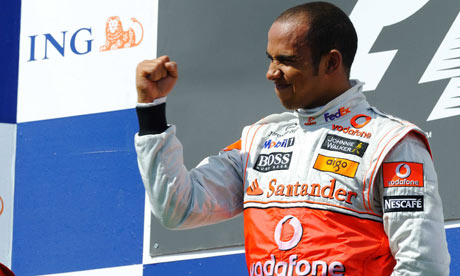
NEW DELHI: The Silver Arrow of Lewis Hamilton has found its way to the top step of the podium once again - after a gap of 10 races! The last time Lewis Hamilton saw himself there was in China last season. In fact, the defending F1 Champion hasn't been on the podium at all since. McLaren-Mercedes had a devastating start to the 2009 season after newcomers Brawn GP started sweeping every race till recently with Jenson Button still leading the Drivers' Championship standings. After a huge legal battle surrounding Brawn, Williams and Toyota's rear diffusers got settled in the three teams' favour, the Working outfit still couldn't find pace enough to rough it up at the top while Ferrari slowly but steadily recovered - even scoring podium finishes. The MP4-24 that Hamilton and Kovalainen drove at Hungary today seemed totally different beasts than the car which McLaren started off with in 2009 - well behaved and super reliable. Qualifying Qualifying was a whole different story - a whole lot of drama that engulfed quite a few teams with Renault emerging with a huge smile on their faces. Even as Q3 drew to a close the official timing system crashed leaving a very secretive lull over who was actually the fastest driver on the grid on Saturday. As things got clearer and the official times were finally announced it was two-time Champion Fernando Alonso who was on top with the Red Bulls of Sebastian Vettel and Mark Webber following him in second and third. Alonso was clearly fuelled low, but the biggest threat to Vettel and Webber was going to be from the KERS equipped cars of Kimi Raikkonen and Lewis Hamilton. If you're wondering why Button's Brawn GP car isn't mentioned in the mix, it's because of a huge mishap that happened with Rubens Barrichello's car. The spring on the rear damper of the Rubinho's car came loose during Q2 and flew off straight into the path of a speeding Felipe Massa who got hit on his helmet with the piece of machinery. The collision apparently ripped Massa's helmet causing a skull fracture and a concussion to his brain. The Brazilian was airlifted and is out of danger after doctors performed surgery at the AEK hospital in Budapest. The Ferrari driver is recovering soon but might miss out on races though the rest of the season. With such a huge mechanical failure on Barrichello's car, Button's BGP 01 was pulled in for inspection as well causing him to put in very few laps in qualifying - a move that Brawn GP couldn't recover from for the rest of the season even of they would have been up and near Red Bull's pace. Race Day 19 cars lined up the grid today for the start of the Hungarian Grand Prix with Felipe Massa's car missing due to his accident on Sunday. There was a definite air of concern in the air for the Brazilian driver's well being, especially after young F2 driver Henry Surtees lost his life last week in a similar accident when he was hit by a renegade tyre off another competitor's car. The weather was nice, though hot, but with no clouds in sight that could cause any kind of upset. Fernando Alonso ran off at the start with a superb launch that kept everyone way behind. The KERS boost from Hamilton and Kimi saw them make up quite a few places with a melee in the first two corners that saw Vettel loosing out with what they claim was contact on his front wing. Vettel settled in 6th after all that but never could really recover from the incident - eventually retiring soon. Hamilton made his way into second place with the 90 horsepower boost pushing him ahead of Webber in a move from the outside. Raikkonen stayed right on Webber's tail till the first round of pit stops. There on Hamilton seemed unstoppable even with Alonso in the lead as the Brit steadily caught up with the Renault. Great driving mixed with brilliant thinking and sound strategy from McLaren saw Hamilton move into the lead and stay there all the way through till the end. Lewis found himself in control of a race after an extremely long time and self admittedly it felt great! Alonso was never going to be the race winner today judging by the performance of his Renault even if he had managed pole position. But the way that privilege was taken from him was unjustifiable. On his first pit stop, he was asked to go before the mechanics could fully tighten the wheel nut on his front right wheel which caused the aerodynamic bit that diverts air to cool the front discs to be left loose. Eventually, the carbon fibre piece came off and so did the front right tyre. Alonso managed to limp to the pits, get a replacement tyre and come back out again but the damage was too big for the Spaniard to recover fully as he had to retire early. Kimi meanwhile was piling the pressure on Mark Webber and as the two entered the pits for the first time together, a glitch in Webber's stop meant that Raikkonen pipped the Australian in the pit lane - with Webber pulling out and almost ploughing into the side of the Ferrari as well as a couple of Williams' pit crew! Kimi drove a great race there on, but Hamilton just had a better car to not only match the Finn's pace, but also better it when required. A minor problem with Kimi's car not selecting first gear in his second pit stop was a slight cause of worry for the Maranello outfit but in the end Kimi stayed in second comfortably and finished there. Mark Webber seemed like he would be put under a lot of pressure by Nico Rosberg during the closing stages but great strategy saw him on the softer tyres in the third stint which meant he kept enough pace to finish the Hungarian Grand Prix right where he had started - in third! Rosberg took fourth, with Kovalainen rounding up the top five. Timo Glock put his Toyota in sixth ahead of Jenson Button. It was a three way battle between Trulli, Nakajima and Barrichello for the final point of the race but Trulli held on wonderfully to claim the point. It was a refreshing change to see McLaren back in the thick of the action today, with Ferrari in tow. The Brawn GP BGP 01 was nowhere near the front runners for the first time this season. Could this be an indication for the rest of the season? There are still 7 races to go which still leaves an outside chance for both Lewis Hamilton (19 points) and Kimi Raikkonen (18 points) to make amends and snatch the Championship from Button who leads with 70 points. Mark Webber has pipped team mate Vettel in the drivers' standings at the moment to sit in second place with 51.5 points against Vettel's 47. It will be interesting to see hoe Red Bull react here on. However this goes, our sincerest wishes and prayers are with Ferrari driver Felipe Massa for a complete and speedy recovery. There's a one month gap to the European Grand Prix in Valencia now which takes place on 23 August. Nothing will please every Formula 1 fan more than if Massa is able to recover and race at the street circuit where he won last year. Let's keep our fingers crossed. Formula 1 has become exciting again!

Wednesday, July 29, 2009

Formula One teams look at racing three cars, qualifying changes

Formula One teams look at racing three cars, qualifying changes

LONDON — Formula One teams are exploring whether they should race three cars beginning next season, along with changes to qualifying designed to make it more challenging.

While the Formula One Teams Association scrapped plans to form a rival series as part of a peace pact with the governing body, leading outfits want to be at the forefront of revitalizing auto racing's global competition.

FOTA is exploring changes that it hopes will make the series more exciting for fans and shift attention back to the track, after many high-profile battles with the FIA this season.

The teams association is believed to be close to recommending an overhaul of qualifying to the FIA. Currently, five cars are excluded after each of the first two parts of qualifying, leaving 10 cars to compete for pole in the final 10-minute session.

A plan that would make the starting lineup more unpredictable is to have five cars challenge in the preliminary session, with the two fastest progressing to challenge the next group of five until the grid is determined.

The proposals are yet to be announced by FOTA, but the group confirmed Wednesday that it will discuss with the FIA a possible expansion of the grid to 36 cars.

"Professional work has already begun within FOTA aimed at increasing the involvement of the fans and at improving the F1 show," secretary general Simone Perillo said. "Among those initiatives, one that could be interesting is the introduction of a third car on the grid.

"FOTA will seek the opinions of all the most relevant stakeholders in order to exchange ideas and define proposals for the future of Formula One."

FOTA announced the plans hours after one of its eight members, BMW Sauber, said it was pulling out of the series due to its lack of success and to focus its resources on the rest of its motor business.

The association, which also includes Ferrari and McLaren, has pledged to help the team continue with new owners, just as Brawn emerged from the ashes of Honda after the Japanese automaker withdrew before the new season.

"FOTA teams have immediately consulted each other and are ready to assure all the necessary support to the Swiss-based team, whose membership in the association is confirmed, to continue its involvement in F1," Perillo said.

Full steam ahead for the Ferrari of its day

Cut red tape to prosper WA could be the future food bowl for Australia and the Asia Pacific region

Chopper rescues woman after Beverley crash

The State’s emergency rescue helicopter, RAC Rescue 1 has been dispatched to Beverley, east of Perth after a car crashed into a tree. The ...


Ferrari 458 Italia: New V8 revealed

Strictly speaking, the first road-going, mid-engined Ferrari was the 250LM, produced to win Le Mans in 1965, but the 1966 Dino was really the first of the rear-engined models that have since become the most popular cars ever built by the prancing horse.

Forty-three years on, Ferrari is replacing the current incarnation of the breed, its six-year-old F430, with a brand new car, the 458 Italia, which will debut at the Frankfurt motor show this September.

  Related Articles

Its coachwork has been designed by Pininfarina with not just a wind-cheating shape, but also deformable wings over the radiators, which close off the intakes at speed to cut drag. The company claims the car produces 308lb of downforce at 124mph.

The 4,499cc V8 engine uses the direct fuel-injection first seen in a Ferrari on last year's California model. Unlike the California, however, the 458 uses a flat-plane crankshaft for faster acceleration and optimised breathing albeit at a slight expense of engine vibration.

The output of the engine is 562bhp at a heady 9,000rpm and 398lb ft of torque at 6,000rpm which makes this engine the highest revving road Ferrari ever, with 0-62mph acceleration in 3.4sec, a top speed in excess of 202mph and EU Combined fuel economy of 20.6mpg. The transmission is the seven-speed dual clutch gearbox which replaces the robotised manual shift system used in the F430.

While there have been rumours that Ferrari was planning to fit the 458 with a hybrid Kinetic Energy Recovery System (Kers) similar to the electrical storage system used on its Formula One cars, the factory has categorically denied this. The Kers systems, introduced as an option in F1 racing this year, have proved problematic and now only McLaren and Ferrari have persevered with them and their long-term future looks to be in some doubt.

While Ferrari is examining the roles that hybrids and alternative fuels can play in the future, for now it promises a 40 per cent reduction in carbon dioxide emissions from its cars by 2012 using conventional technology.

Not that the 458 will lack sophistication, with a newly combined electronic differential and traction control system promising much improved roadholding and handling - not that there was much wrong with the previous model.

The same electronic circuitry will handle an uprated braking system which moves the friction pads into gentle contact with the disc rotors to cut the brake activation time and reduce stopping distances.

Hungarian Grand Prix In Depth: Lewis and McLaren bring the drama ...

Nicole Scherzinger, top right, touches McLaren Mercedes driver Lewis Hamilton of Britain, bottom left, as he celebrates with British Martin Whitmarsh, bottom right, team principal of McLaren Mercedes, and the team members after Hamilton won the Hungarian Formula One Grand Prix at the Hungaroring circuit near Budapest, Hungary, Sunday, July 26, 2009. (AP Photo/Petr David Josek)

Lewis Hamilton wins a Grand Prix in his McLaren, and Kimi Raikkonen brings his Ferrari home in second place, as the legendary McLaren vs. Ferrari battles continue....

When the 2009 Formula One season began this year, I would have bet the house that we would not have had to wait until the 10th race of the year till I would get to write an opening sentence like the one I just did. Yet surprisingly enough, that is the case. So here we are, 10 races in, 7 Grand Prix left, and for the very first time this year, a car other than a Brawn or a Red Bull has won a Formula One race!

McLaren Mercedes driver Lewis Hamilton of Britain crosses the finish line as he wins the Hungarian Formula One Grand Prix at the Hungaroring circuit near Budapest, Hungary, Sunday, July 26, 2009. (AP Photo/Bela Szandelszky

Surely Lewis Hamilton had to be thrilled with this victory, it comes as a such huge surprise, after all, the McLaren team has been struggling at the back of the pack for most of the year. The McLaren team has just made astonishing improvements in their race cars, and Lewis, in typical Hamilton classy fashion, awards plenty of credit to his team. Everything is about “we” with Lewis, he is clearly maturing and is certainly becoming very much the team player. "It's a huge turnaround," Hamilton said. "We said at the beginning of the season that if anyone can do this, it's us. If we had this car at the beginning of season we would be winning."

"We always said we were six months behind the top guys. I hope the guys back at the factory get a good break these next few weeks. It was only a race ago, when we were in Germany, that I first had a little bit of excitement [about the car]. Our target was just to get a podium. We didn't think we had the pace to win."  McLaren Mercedes driver Lewis Hamilton of Britain poses with his trophy after he won the Hungarian Formula One Grand Prix at the Hungaroring circuit near Budapest, Hungary, Sunday, July 26, 2009. (AP Photo/Petr David Josek)

“The Car Is Reborn”

For sure, this is a sweet ,sweet victory indeed for Lewis, the MP4-24 was showing clear signs of their aero improvements in Germany.But that was before Lewis was clipped by the Red Bull of Mark Webber, which caused a tire puncture and put Lewis out of that race. Lewis had been saying, “The car is reborn. I can win with this car.” in Germany, and with his brilliant and quite dominant drive on Sunday in Hungary, he backed those words up.

Big time.

So lets take a closer look at the what happened in the Hungarian Grand Prix, lap by lap, and lets see if we can find some of the reasons for all the smiles at McLaren, and perhaps discover signs of silver linings for Team Ferrari. Lets also examine some of the fouls ups among other racing mysteries to ponder for the Red Bull, Renault and Brawn teams, there were mistakes that were made by some pit crews and what exactly happened with the rest of the Formula One grid...

Sound good? Grid girls pose during the drivers parade prior to the Hungarian Formula One Grand Prix at the Hungaroring circuit near Budapest, Hungary, Sunday, July 26, 2009. (AP Photo/Gero Breloer)

Four Wide Off the Grid

As always in Formula One racing, the start off the grid is always extremely crucial, particularly at a track like the Hungaroring, where passing is extra difficult, and there are few really good chances to overtake anybody.

Alonso on pole blasted off just fine, word was he was very light on fuel (enough for estimated 11 laps), and his car looked very swift as he dashed to the first turn. But there was a lot of action going on in Alonso's mirrors....Renault driver Fernando Alonso of Spain leads the field into turn one at the start of the Hungarian Formula One Grand Prix at the Hungaroring circuit near Budapest, Hungary, Sunday, July 26, 2009. (AP Photo/Gero Breloer)

This photo (above) really gives us a great look at the action, and it all happened in a blur. (once again, thank goodness for the DVR, I slowed this down and watched it again, since it was so fast and furious.)

The KERS cars- Lewis in his McLaren and most especially Kimi Raikkonen in his Ferrari, got terrific power boosts by blasting the 80 horses at their fingertips with their KERS systems. Lewis swings inside of the Red Bull driven by Sebastian Vettel, towards the middle of the track. Meanwhile, on the other side of the track, Kimi had zoomed forward from 7th ,and he also sees an inside move on the Webber Red Bull. But neither Kimi or Lewis realized they were both aiming for the same area of the middle of the track with their passes.

Renault driver Fernando Alonso of Spain leads the field into turn one at the start of the Hungarian Formula One Grand Prix at the Hungaroring circuit near Budapest, Hungary, Sunday, July 26, 2009. (AP Photo/Gero Breloer)

Lewis at the very last moment sees Kimi's Ferrari about to sideswipe his McLaren, so he darts back to the right, nearly slamming into Vettel, which is just about to happen in the first grid photo above. (Lewis may have clipped Sebastian's front wing)

Hamilton is still surging for the first turn, and Webber lets him go, because he realizes that Lewis will have to go wide on turn 1, which allows Mark to retake second from Lewis after turn one. Meanwhile, leaving turn 1, Kimi does sideswipe somebody, but this time its Vettel. (Vettel's car is damaged, and he eventually needs to retire from the race)

Red Bull driver Sebastian Vettel of Germany, background, and Ferrari Formula One driver Kimi Raikkonen of Finland, steer their cars into turn one at the start of the Hungarian Formula One Grand Prix at the Hungaroring circuit near Budapest, Hungary, Sunday, July 26, 2009. (AP Photo/Gero Breloer

But Webber's lead over Hamilton was about to disappear. And its because Hamilton was about to show Webber the move of the race....

Lap 4- Hamilton's Brilliant Pass

Top 4 at this point is Alonso, Webber, Hamilton and Kimi.

Alonso is clocking some fast laps, but Webber and Hamilton are just as fast. Lewis looks quicker than Webber, and he sets Mark up like a bowling pin on this lap. He is right up the Red Bull's tailpipes, when he suddenly swings his McLaren to the outside, just before a right turn. We see this in the photo below.  But Hamilton's outside move is only a feint, and as they enter the apex, he darts back inside Mark, and then stays inside, as they accelerate out of the turn, onto a short straight. Lewis dials in his KERS boost, which of course the Red Bull cannot match. The Red Bull and McLaren are sprinting side by side up the track, like two drag racers, until Hamilton noses out front and shuts the door on Mark at the next turn for second place. Turns out that door was shut for good on the Red Bull.

McLaren Mercedes driver Lewis Hamilton of Britain, right, and Red Bull driver Mark Webber of Australia steer their cars side by side during the Hungarian Formula One Grand Prix at the Hungaroring circuit near Budapest, Hungary, Sunday, July 26, 2009. (AP Photo/Gero Breloer)

For the rest of the day, Webber saw nothing but Hamilton's exhaust fumes. Just a brilliant bit of Formula One racing and a true World Champion's move on an experienced driver.

End of Part I Hungarian Grand Prix In Depth: Lewis and McLaren bring the drama back to F1

Hungarian Grand Prix In Depth: Lewis and McLaren bring the drama back to F1-Part II

See also- Hungarian Grand Prix: Hamilton a surprise winner


F1: Massa recovers as Schumacher returns

There's no doubt, Ferrari need some good news. For the first half of this season, they have been off the pace despite a rapid development programme and considerable efforts from their drivers. Then Massa's horrible crash and the serious injuries caused to him quietened the whole pit lane but subdued Ferrari, already miserable, still further.

And so whilst the cars may not get pole position, the news that Michael Schumacher will return after three years away from the sport will ensure massive media coverage.

But whether his return is good news will depend on a number of factors: in theory Schumacher has not been allowed to drive this year's car since the season started. In-season testing is banned. This means that Schumacher has no experience of KERS nor of driving this year's car with its new aerodynamics and slick tyres.

But video footage broadcast on several news media this morning showed a Ferrari taking to the track from the garage. None of them carried a note saying the film was library footage. So is Schumacher taking a car out?

Another factor is that, after three years away, Schumacher is heavier than he was when he last raced and he is not race fit. For sure, he is fitter than the vast majority of the planet's population but whether he is as fit as other drivers in Formula One has to be open to doubt. That's not a criticism: it's a statement of fact based on the fact that the forced involved in driving a Formula One car are far beyond that in almost anything except flying a jet fighter. First to suffer will be his neck which is clearly not as thick, relative to his head, as it was when he last raced.

There is no getting away from Schumacher's competitiveness: in a recent series of interviews with the terminally dimwitted and puke-inducingly self-promoting Sanjeev Palar from Star Sports he was visibly irritated by the pathetic questioning including - incredibly - "how did that make you feel" about his first World Championship.

Massa's personal doctor, Dino Altmann, has said that Massa will not race again this year but that his career is "far from over." "The improvements have gone beyond our wildest expectations," Altmann said. He was responding to the news that Massa had taken a few steps yesterday. However, as he prepares to fly to Paris for more treatment, Massa is aware that there is damage to his left eye from the impact with the spring that bounced into his helmet during qualifying for the Hungarian Grand Prix.

The issue, it appears, is not whether Massa will be blinded - that's already known not to be the case - but whether the damage may affect his ability to gauge depth - approaching corners and other cars at high speeds requires the ability to judge distances immaculately.

Perhaps happiest to see Schumacher return will be Lewis Hamilton: the McLaren and Ferrari cars are evenly matched this year and have similar specifications. Hamilton has said that his only regret in Formula One is that he did not get to race against Schumacher who, Hamilton says, "baled" the year before Hamilton arrived.

Montoya's penalty the pits

+ What are these?

It is hard to believe that Juan Pablo Montoya was speeding in the No. 42 Earnhardt Ganassi Chevrolet at the Brickyard 400 this past week once, let alone twice.

This is, after all, an athlete who has hundreds of races on his resume and has become the poster boy for former Formula One drivers who want to try NASCAR.

Yet the proof was irrefutable. Montoya was caught going 60.6 m.p.h. and later 60.11 m.p.h. on a trip down pit lane where the speed limit is 50 m.p.h.

For his transgression, Montoya was given a drive-through penalty that moved him from first to 12th with just 25 laps top go and effectively stole the win from an EGR team that had dominated the proceedings to that point.

Why, you might ask, is this particular case any different from any of the many similar speeding penalties handed down by NASCAR officials over a season?

Because the successes of the Colombian-born racer are being nurtured by just about everybody in NASCAR. The thought of Montoya achieving greatness in the series has NASCAR bosses positively drooling at the thought of plugging into an American market of close to 40 million Hispanics.

A day after the race, even NASCAR chairman Brian France was lamenting that the win was taken away because of a penalty.

"There's nothing that dropped our hearts more than to see that speeding violation flash up on the computer," France told SIRIUS satellite radio. "Nothing would have made us happier had he earned -- and he definitely had the best car and he was driving the wheels off -- to have (had Montoya) won that race and made a little history with the Indy 500 and the Brickyard 400. But the rules are rules."

The maddening thing is that the blame rests totally on the shoulders of Montoya, in spite of his protestations after the incident.

"Thank you, NASCAR, for screwing my day," Montoya said on his in-car radio. "We had it in the bag and they screwed us because I was not speeding. I swear on my children and my wife."

The only possible explanation is that the green light that signals the car is under the speed limit was malfunctioning at the time of the infraction because Montoya swears it was flashing on.

But in the bigger picture it looks as though Montoya -- in 10th place with six races left before the Chase for the Sprint Cup Championship -- will make the post-season cut.

That alone should bring out hordes of his rabid fans and have NASCAR bosses smiling once more.

Massa's miracle

Just days after dire predictions that Felipe Massa never would recover from a tragic accident during F-1 qualifying at the Hungarian Grand Prix, his doctors now say he should be able to walk out of hospital under his power by the end of next week.

Dr. Peter Bazso, the medical director of the military hospital where Massa was taken after his skull was fractured, told Hungarian TV channel M1: "My expectation is that he would walk out of the hospital on his own. If his recovery continues at this pace, I wouldn't rule out that he could leave within 10 days."

Although Massa's condition was massively better than immediately reported after being struck on the head from a spring that broke loose from Rubens Barricello's Brawn GP car at 120 m.p.h., Dr. Bazso said it was still too early to know what the lasting effects of his injuries might be.

"I would like to point out that although he's recovering, this is not the end of the story, he is still in a life-threatening condition," Dr. Bazso said. "Of course, the danger is decreasing by the day."

Canadian corner

Roxton Pond, Que., native Andrew Ranger drove the No. 27 Dave Jacombs Racing Ford to victory at the Rexall Edmonton Indy Canadian Tire 200, putting him in first place in the NASCAR Canadian Tire Series standings.

Finish lines

The Indianapolis Star is reporting that IMS officials have discussed staging a Sprint Cup exhibition race on the Indy road course with NASCAR and Grand Am's sports cars later this season. The road course will begin to be installed next week for the Aug. 28-30 motorcycle event, the Red Bull Indianapolis Grand Prix ... Michael Schumacher's manager Willi Weber has quashed rumours that the seven-time world champion could make a return to Formula One in place of the injured Massa for Ferrari.

DEAN.MCNULTY@SUNMEDIA.CA


Click

Revealed: How BMW lost the plot

BMW'S Formula One team lost the plot after setting their targets too low and failing to react quickly enough when it all went horribly wrong, F1 experts have revealed.

The team's spectacular fall from grace has been the biggest mystery of 2009.

And now it has rocked F1 by announcing it will quit at the end of the year.

Last season BMW made up the Big Three with McLaren and Ferrari and driver Robert Kubica was a world championship contender.

But this year Kubica and team-mate Nick Heidfeld have been way off the pace of the front-runners.

They have scored just EIGHT points between them in ten races.

And while McLaren and Ferrari have recovered from slow starts to the season to finish 1-2 in last weekend's Hungarian Grand Prix, BMW were still floundering.

Heidfeld came home 11th with Kubica 13th. And you could almost FEEL Kubica's shoulders sagging when he said afterwards: "I had massive understeer and a lot of front tyre wear throughout the entire race.

"About ten laps into each stint my front tyres degraded a lot — and I was very slow."

So why the dramatic collapse?

The answers come from Edd Straw, F1 editor of motor sport's "bible" Autosport magazine.

He told how BMW were first to try out their new car following the raft of rule changes over the close season.

UP IN SMOKE ... BMW's season

UP IN SMOKE ... BMW's season

And they were "pretty happy" when they discovered the downforce they were achieving with their new aerodynamic bodywork exceeded predictions thrown up by their pre-season computer simulations.

The trouble was that those predictions were way too low.

At a following test they took to the track with Ferrari — and again were content when their lap times matched those of the Italian giants.

But they did not realise that Ferrari had initially come up with a duff car, too.

Straw said: "It was only at later tests with other cars that they realised they were lagging behind. And when Brawn finally hit the track in March, they saw the goalposts had been moved."

But why are they still struggling when Ferrari and McLaren have made such big gains?

Straw said: "You can only put that down to the fact it has taken them longer to react."


Click

Tuesday, July 28, 2009

You can't prevent such accidents: Karthikeyan

NEW DELHI: For racing drivers, there's one inescapable truth. Accidents. It's a reality that stares them in the face every single time they sit in a car or on a racing bike. And that certainty was forcefully realized on Saturday at the Nurburgring when a metal spring that escaped from Ruben Barrichello's crash hit Felipe Massa on the head, causing the Ferrari driver to lose consciousness and plough straight into the barrier. Narain Karthikeyan, India's only Formula One driver, has had his fair share of racing accidents and even ended his debut season with a massive smash up that left his yellow Jordan good for nothing else but the junkyard at the Shanghai International Circuit in October 2005. Karthikeyan fortunately escaped with just a badly sore neck. "No matter however safe you make racing, accidents will happen. The element of risk will always remain. What happened this Saturday at the Nurburgring was 'freakish'. I don't think you can prevent or control such accidents," said Karthikeyan, who has also suffered a few mean turns and spills in A1GP recently. At the same time, he backed the FIA decision to ban Renault for willingly putting the drivers in danger by allowing Fernando Alonso to race with a loose wheel. "That was just plain stupid and they've been rightly punished. The ban is appropriate. The team definitely knew that the wheel wasn't fastened properly and they could've prevented it from bouncing all over the track. What if it had struck another car or driver?" he asked. When asked about his Shanghai shunt, Karthikeyan was understandably a little hazy about details. He lost control of the car on Turn 13 and the smouldering wreckage of the Jordan sat in the middle of the track. "All I remember is losing control of the car. I don't know what I hit but I felt the air come out of my lungs," Karthikeyan said, trying to recall the events of his last Sunday in F1. "When I opened my eyes, I was sitting in the middle of the track with some car coming straight at me. Your instinct is to run. The car was also on fire." Safety measures in F1 have come a long way since Ayrton Senna's horrific crash at Imola in 1994. Massa's survival underlines how well protected drivers are and Karthikeyan agrees with that point. "The equipment, the rules all have made F1 very, very safe. Safety has gone up ten-fold since 1994. The sport today is the safest that it has ever been. We haven't lost a driver since Senna's death. Safety is a huge issue and it comes up at all driver meetings. There's no stone left unturned when it comes to safety," Karthikeyan explained. "I actually wonder what they could possibly do to make single-seater cars safer." SAFETY MEASURES

Click

CRS refuse to relax in 24 hour Spa

Both of our Ferraris struggled during the first part of the race with some unexplained tyre issues.

Neither Andrew Kirkaldy or Tim Mullen could get the cars to go flat out. We still don't know exactly why but once new tyres were bolted on they were both as fast as anyone. With a bit of time lost we had to get our heads down and go for it.

Chris Niarchos jumped into No.55 a couple of hours into the race, just as the rain returned.

As usual is was a torrential downpour that even resulted in ex-F1 World Champion Jacques Villeneuve being involved in a race-ending crash. Chris stayed cool though and came in for wets at the first opportunity.

After a brilliant run by Chris, he came in to hand over to the other Chris: Chris Goodwin.

During this pit-stop the starter motor failed. We all know how annoying it is when your car won't start. Well, just imagine it when it's a race car.

After an excruciating minute the team took the decision to pull the car into the garage and replace the starter motor as it would only happen in every subsequent pit-stop.

The mechanics changed it in 13 minutes, which is a record, and Ferrari No.55 rejoined the race.

We had a good night at Spa. When the other cars started to drop out, our Ferraris just kept on running like clockwork.

TEAM EFFORT ... CRS drivers applaud the mechanics

TEAM EFFORT ... CRS drivers applaud the mechanics

The conditions were hard for the drivers as there was just a single dry line on the track, which was hard to follow in the blackness of the night.

Just after midnight it started to get very foggy through Blanchimont, which is the fastest corner on the track, so that had us all holding our breaths for a while. Eventually the safety car went out to slow everyone down until the fog cleared.

The dawn revealed a blue sky, which was a welcome relief as the night had been very cold.

During the morning the No.56 Ferrari of Kirkaldy and Bell, along with Peter Kox and Antonio Garcia who joined them for this race, started to develop the same starter motor problems that befell the sister car.

After trying every trick in the book there was no other choice than to bring her in and change the starter motor.

This time the boys broke their own record and got the job done in just 11 minutes. You wouldn't get service like that at your local dealer!

All eight drivers did an awesome job at Spa but my driver of the day award has to go to Peter Kox in the No.56 Ferrari.

Towards the end of the race Antonio Garcia reported in that fourth gear was very noisy. This was the first sign that the gearbox had had enough. We were running in second place at this point so to call the car in for a gearbox change would have been a disaster.


Click

Ferrari releases images of its Italian greyhound, the 458 Italia

Ferrari-458-italia-front-three-quarter-1Now that images of Ferrari's spanking new mid-engine V8 berlinetta -- the 458 Italia -- have hit the virtual wires, the problem with the outgoing F430 Modena becomes comparatively obvious: The F430 is thick-waisted, otiose, a slug, straining the seams of its red livery like an overfed Vatican cardinal. It didn’t seem so before – indeed, the sight of an F430 hit one’s brain-case like scarlet lightning and the sound of its flat-crank, 483-hp V8 could rouse long-dead relatives from their slumber. But now I see what a truck it was.

Here, here, is a proper Ferrari.

Ferrari-458-italia-rear-three-quarterThe 458 Italia – debuting in September at the Frankfurt Motor Show – is the slinkiest road-going Ferrari ever, with a fluid, flowing, barely-there bodywork that clings to the car’s chassis like a red silk scarf in an F5 tornado. Spectacularly low and wide, with a huge dynamic energy as the folds of the car come together at the rear-quarter panel (note the absence of air intakes over the rear wheel arches), the 458 Italia is a rolling clinic of Ferrari design cues the Enzo tail lights and general posture, the 612 Scaglietti contour line, the sharkish snout of a Dino. And all of it sketched with lighter-than-air graphite.

Ferrari-458-italia-sideThe lightness isn’t purely visual: the 458 Italia weighs in at 3,046 pounds, a feathery mass pitted against the car’s direct-injection 4.5-liter V8 (thus name 458), seven-speed clutchless manual transmission and Ferrari’s latest driving electro-dynamics, including systems-integrated versions of E-Diff and F-Trac, which help the car generate an astounding 32% more longitudinal acceleration out of corners. To unpack that a bit, it means you can get on the gas even earlier coming out of a corner and the car will instantly sort out each rear wheel’s max torque capacity. The factory says seven-time world champion Michael Schumacher helped with the fine tuning. Should be quite the roller-coaster.

 The 458 gets it done in a straight line too: 3.4 seconds to 62 mph and a top speed of 204, with the backing of the 562 HP at 9,000 rpm (52 hp more than the F430) and 398 lb-ft of torque at 6,000 rpm. And the electronically maximized brakes aren’t bad, either: 62 to 0 in a mere 105 feet.

 The official release, with dizzying factoids and technical detail, after the jump.

-- Dan Neil

ITALIA - Ferrari's innovative new V8

The 458 Italia is the latest incarnation of the mid-rear engined berlinetta and will be unveiled at the next Frankfurt Motor Show

Maranello, July 28th 2009 – While it's true that every Ferrari is innovative by definition, it's equally true that in the course of the Prancing Horse's history, certain cars have marked a genuine departure from the current range. This is very much the case with the Ferrari 458 Italia, which is a massive leap forward from the company's previous mid-rear engined sports cars.

 The new model is a synthesis of style, creative flair, passion and cutting-edge technology, characteristics for which Italy as a nation is well known. For this reason Ferrari chose to add the name of its homeland to the traditional figure representing the displacement and number of cylinders. The Ferrari 458 Italia is a completely new car from every point of view: engine, design, aerodynamics, handling, instrumentation and ergonomics, just to name a few.

A two-seater berlinetta, the Ferrari 458 Italia, as is now traditional for all Ferrari's road-going cars, benefits hugely from the company's Formula 1 experience. This is particularly evident in the speed and precision with which the car responds to driver inputs and in the attention focused on reducing internal friction in the engine for lower fuel consumption than the F430, despite the fact that both overall displacement and power have increased.

However, Ferrari's track experience makes its presence felt in the 458 Italia not only in terms of pure technological transfer but also on a more emotional level, because of the strong emphasis on creating an almost symbiotic relationship between driver and car. The 458 Italia features an innovative driving environment with a new kind of steering wheel and dashboard that is the direct result of racing practice. Once again input from Michael Schumacher - who was involved from the very start of the 458 Italia project - played an invaluable part.

The Ferrari 458 Italia's Pininfarina design provides further evidence of the complete departure from the past that this new car hails. The Ferrari 458 Italia has a compact, aerodynamic shape, underscoring the concepts of simplicity, efficiency and lightness that inspired the project. As with every Ferrari, the car's styling has been very heavily influenced by the requirements for aerodynamic efficiency, as can be seen from the downforce of 140 kg at 200km/h generated by the new model. The front features a single opening for the front grille and side air intakes, with aerodynamic sections and profiles designed to direct air to the coolant radiators and the new flat underbody. The nose also sports small aeroelastic winglets which generate downforce and, as speed rises, deform to reduce the section of the radiator inlets and cut drag.

The new 4499 cc V8 is the first Ferrari direct injection engine to be mid-rear mounted. It has a very low piston compression height typical of racing engines which contributed to achieving its compression ratio of 12.5:1. Equipped with the traditional flat-plane crankshaft, the engine delivers 570 CV at 9000 rpm and, with an outstanding power output of 127 CV/litre, sets a new benchmark not only for the whole Ferrari range and the history of the company, but also for the entire market segment. Maximum torque is 540 Nm at 6000 rpm, over 80 per cent of which is available from 3250 rpm. Specific torque is a record 120 Nm/litre. However, what is truly extraordinary is the amount of torque available while still maintaining high levels of power at low revs.

The car's soundtrack is also typical Ferrari, with an exciting, powerful growl emerging from the engine before it channels through to the exhaust's three rear tailpipes.

The 458 Italia is equipped with the seven-speed dual-clutch transmission, which increases performance whilst providing very smooth shifts even at full throttle. The engineers have developed specific, sportier gear ratios to match the power and torque curves of the new V8, guaranteeing high torque even at lower engine speeds and allowing the car to reach its maximum speed in top gear.

This new Ferrari is also a major leap forward when it comes to cutting emissions. Despite the fact that the new engine is significantly more powerful than the V8s that preceded it, the Ferrari 458 Italia produces just 320 g/km of CO2 and fuel consumption is 13.7 l/100 km (combined cycle), the best in the entire segment.

The engineers also focused on weight reduction during the design phase for similar reasons. Consequently, the Ferrari 458 Italia has a dry weight of 1380 kg with a power-to-weight ratio of 2.42 kg/CV. Weight distribution is also optimal with 58 per cent over the rear axle. The result of the engineers' endeavours can be summed up in to two simple statistics which together perfectly encapsulate the Ferrari 458 Italia's exceptional performance: 0-100 km/h acceleration in under 3.4 seconds and a maximum speed in excess of 325 km/h.

For the new chassis, once more in aluminium, Maranello's engineers incorporated various types of advanced alloys along with aerospace industry-derived manufacturing and bonding techniques.

With regard to vehicle dynamics, the Ferrari 458 Italia's suspension features twin wishbones at the front and a multi-link set-up at the rear tuned for maximum roadholding and superlative handling. Along with a more direct steering ratio, the 458 Italia thus offers extremely rapid turn-in and body control whilst maintaining superior ride comfort.

The integration of the E-Diff and F1-Trac (now controlled by the same ECU) and their respective mappings is even greater, resulting in a 32 per cent increase in longitudinal acceleration out of corners compared to previous models. The evolution of the control logic, with even faster and more accurate calculation of levels of grip, ensures even greater roadholding, better handling and ease of control on the limit.

The same ECU also governs the high-performance ABS, providing even more precise control over the logic threshold and greater efficiency. The brakes also feature a prefill function whereby the pistons in the calipers move the pads into contact with the discs on lift off to minimize delay in the brakes being applied. This combined with the ABS has cut the 100-0 km/h braking distance to a mere 32.5 metres.

The Ferrari 458 Italia's interior is another area of the car that exalts its sporty personality. The driver is welcomed by a new layout and a revolutionary ergonomic interface where the main controls are all clustered on the steering wheel. 

With the Ferrari 458 Italia, Maranello has brought a highly distinctive new car to its 8-cylinder range. The company now offers two models that share a common, race-derived DNA, both exceptionally sporty and fun to drive in true Ferrari tradition, but aimed at two very different kinds of client. While the Ferrari California was created for owners requiring a more versatile sports car with a practical edge, the 458 Italia is designed for owners for whom the priority is uncompromising on-road performance with occasional track day capability, but who still demand a car that is useable in day-to-day driving like all Ferrari's recent models.

Ferrari 458 Italia – Technical specifications

Dimensions

Length 4527 mm (178.2 in.)

Width 1937 mm (76.3 in.)

Height 1213 mm (47.8 in.)

Wheelbase 2650 mm (104.3 in.)

Dry weight 1380 kg (3042 lbs)*

Weight/power ratio 2,42 kg/CV (7.16 lbs/kW)

Weight distribution fr/r 42%/58%

Engine

Type V8 – 90°

Displacement 4499 cc (274.5 cu in.)

Maximum power 570 CV (425 kW)** @ 9000 rpm

Maximum torque 540 Nm (398 lbs/ft) @ 6000 rpm

Specific power output 127 CV/l

Compression ratio 12.5:1

Tyres

Front 235/35 ZR20 8.5"

Rear 295/35 ZR20 10.5"

Performance

Maximum speed >325 km/h (>202 mph)

0-100 km/h

Fuel consumption + emissions

Fuel consumption*** 13.7 l/100 km

Emissions*** 320 g CO2/km

Gearbox

Dual-clutch, 7-speed F1

Electronics

E-Diff3, F1-Trac, high-performance ABS

* With forged wheels and Racing seats

** Including 5 CV of ram effect

*** Combined cycle (ECE+EUDC)

Felipe Massa's injuries may get Michael Schumacher back on track

Schumacher, 40, retired after the 2006 season and after winning five of his world titles with Ferrari, where he remains a consultant. It wasn't clear whether Schumacher was interested -- overseas news agencies quoted one of his representatives as saying he was, while his manager said he wasn't -- or whether Ferrari even would offer him the job. "In these circumstances he would want to consider it and not categorically say no," Schumacher spokeswoman Sabine Kehm told Reuters. But if the German did step back into the car, he would do so just as reigning Formula One champion Lewis Hamilton of McLaren Mercedes and 2007 champion Kimi Raikkonen, Massa's teammate at Ferrari, are emerging from terrible early-season slumps. Ferrari has time to make a decision because the next race, in Valencia, Spain, is Aug. 23. But Massa is expected to be out for most, if not all, of the rest of the season. Hamilton, who captured the title last year by a single point over Massa, won the Hungarian Grand Prix on Sunday for his first victory of the season. Raikkonen placed second, his best showing of the season as well. Indeed, it appears McLaren and Ferrari -- which had dominated Formula One in recent years -- are catching up with the Brawn GP and Red Bull teams earlier than some observers expected. Brawn, the former Honda Racing team, and Red Bull had been also-rans in recent years. But they shocked the sport this season by winning the first nine races after developing race cars that took better advantage of the series' new design regulations than those built by McLaren, Ferrari, BMW Sauber and other teams. Brawn's Jenson Button won six of the first seven races. Red Bull's Sebastian Vettel is a two-time winner and his teammate, Mark Webber, won the German Grand Prix. As a result, Button leads the Formula One championship standings with 70 points over Webber's 51.5. Vettel is third with 47. Hamilton is eighth with only 19 and Raikkonen ninth with 18. But even if the championship is beyond reach, Hamilton said his team believed it could win again this year. "It's an incredible feeling to be back here after what feels such a long time away," Hamilton said after his victory in Hungary. "We have made some serious improvements to the car. It is important that we just continue to push." Massa, meanwhile, continued to make progress in a Budapest hospital, where he was rushed Saturday after suffering head injuries when a loose part -- which Formula One said was a spring from the car of Rubens Barrichello -- struck Massa's helmet. Doctors said the 28-year-old Brazilian driver was increasingly alert and answering questions in three languages, and that he might be released from the hospital in a week to 10 days, the Associated Press reported. Speaking of missing Valencia, Formula One officials said Spaniard Fernando Alonso, a two-time champion, and his Renault teammate Nelson Piquet cannot race there as a penalty for a mishap that occurred in Hungary. Alonso's crew failed to attach the front right wheel during a pit stop and it came loose and bounced away after his car returned to the track, which race stewards ruled amounted to negligence on Renault's part. (Imagine how many cars wouldn't make the next race if that rule existed in NASCAR.) Renault plans to appeal but, if it loses, Alonso would miss one of the two Formula One races held each year in his home country. james.peltz@latimes.com

Click

2010 Ferrari 458 Italia Renderings Shown Before Frankfurt Debut

First off, great name.  The 458 Italaia?  Beautiful.I think they finally got the memo at Ferrari/Pininfarina to go back to styling cars and not just engineering them.  Caterhams and Elises have supercar performance, but that's all they offer.  The Caterham, for instance, is a ladder with wheels.  Cars like Ferraris and Lamborghinis, though, offer the complete package, not just mechanically, but aesthetically.  Or at least they're supposed to.  If you go watch on youtube Jeremy Clarkson's review from the 90s of the F355, he talks about this, and if he doesn't and I just don't remember this well, then you can see what I mean.  That car had fantastic performance while being very usable and incredibly handsome yet still somewhat understated.  This is the F355's descendant, albeit there were the 360 and 430 in between.  This looks like the proper heir to the 360 throne, whereas the 430, though certainly not unattractive, looked too purpose-built.  Think about Italians and everything they do.  Do you really want them to try to plan everything out?  Do we want Italians "exerting" themselves that way?  Ethiopia, for instance?  No.  Lamborghinis are infamous for their oddities and tendencies to burst into flames (I'm pointing at you Gallardo, Miura).  The original Miuras, being mid-engined, had the gas tank over the front wheels, and as you used up gas, the weight on the front decreased and you lost traction.  Not good planning.  But that didn't matter because they planned enough to make it a) mid-engined and b) unfathomably gorgeous.  That was as much as was needed.  Any more and it would have made too much sense to be fun.While this car sheds virtually any semblance of past Ferraris' understatedness, it has a terrific arrogance to it that suggests it is ready to take on the Gallardo, which has surpassed the low-hanging Ferrari fruit in terms of desirability by virtue of styling.  Compared to the 438, the 458 has a far more cohesive design, generally free of the excessive complexities and small, unintegrated features that have plagued the 430 and 599.  The sheetmetal is simple but sophisticated.  It looks purposeful but not mechanical.  From the front, the 458 looks like a relative of the Maserati MC12 with its low, wide, gaping grille.  Again, uncluttered front end, with aggressive headlights.  The way in which the hood (technically the boot...) sits in a valley between the exaggerated wheel wells reminds me favorably of the C3 Corvettes.  Unfortunately, Ferrari could not avoid the temptation of air ducts in the wheel housings, and immediately inside the headlights.  I am sure they serve very good aerodynamic purposes, but they detract for the overall appearance.  And of course, that huge black insert in the grille, which supposedly deforms at higher speeds to create downforce, is just plain ugly.  It's just ugly.  Blech.The side profile is fantastic and the stuff of dreams.  All the angles are raked just they way you would draw your own supercar.  The rocker panels below the door scream mini-Enzo (as does the whole side profile), especially right in front of the rear wheel well, and the scalloped panel behind the front wing subtly apes the 612.  While from the front 1/4 angle the midsection of the car looks too low and perhaps even a bit anorexic, from the side it looks athletic and appropriately lean.  The rear is too much of a catastrophe.  Large gaps in the sheetmetal, filled with grillework, look messy and patched together.  The Gallardo accomplishes this approach more cleanly.  This looks hurried and reverts back to the overly-purposeful look found on the rear of the 430.  One of the nice features of Ferraris from the recent and distant past has been a sizeable patch of relatively flat, uninterrupted Corsa Rossa where that big chrome prancing horse laid ensconced.  The 360 and 355 were certainly adorned this way.  Yes, this car has some of that, but that feature is flanked on the sides by oddly shaped grilles and sits above too many contrasting concave/convex surfaces, some recessed and others not.  Simply, it is not elegant.The triple tailpipes look sweet, but they look like an addition on a jumbled rear end.  Such a unique feature such as triple tailpipes should be one of a couple highlights on the rear of the car.  It is unfortunate to watch the demise of the quad tail lights, but I can live with the singles, and putting them in the corners is alright, too; however, by placing them so high, the car gains unnecessary visual height much as the California looks very tall out back.All in all, while the car looks somewhat like Motortrend rendering, it feels more like a Ferrari than the California and looks more like a 360 than a 430.  That's all good.  This is a eally catchy, edgy, beautiful design, but really from one foot in from each end.

Click

Ferrari's Innovative New V8—the 458 Italia

The Italia is the latest incarnation of the mid-rear engined Ferrari berlinetta and will be unveiled at the Frankfurt Motor Show in September. While it's true that every Ferrari is innovative by definition, it's equally true that in the course of the Prancing Horse's history, certain cars have marked a genuine departure from the current range. This is very much the case with the Ferrari 458 Italia, which is a massive leap forward from the company's previous mid-rear engined sports cars.

The new model is a synthesis of style, creative flair, passion and cutting-edge technology, characteristics for which Italy as a nation is well-known. For this reason Ferrari chose to add the name of its homeland to the traditional figure representing the displacement and number of cylinders.

The Ferrari 458 Italia is a completely new car from every point of view: engine, design, aerodynamics, handling, instrumentation and ergonomics, just to name a few.

A two-seater berlinetta, the Ferrari 458 Italia, as is now traditional for all Ferrari's road-going cars, benefits hugely from the company's Formula 1 experience. This is particularly evident in the speed and precision with which the car responds to driver inputs and in the attention focused on reducing internal friction in the engine for lower fuel consumption than the F430, despite the fact that both overall displacement and power have increased. However, Ferrari's track experience makes its presence felt in the 458 Italia not only in terms of pure technological transfer but also on a more emotional level, because of the strong emphasis on creating an almost symbiotic relationship between driver and car. The 458 Italia features an innovative driving environment with a new kind of steering wheel and dashboard that is the direct result of racing practice. Once again input from Michael Schumacher—who was involved from the very start of the 458 Italia project—played an invaluable part.

The Ferrari 458 Italia's Pininfarina design provides further evidence of the complete departure from the past that this new car hails. The Ferrari 458 Italia has a compact, aerodynamic shape, underscoring the concepts of simplicity, efficiency and lightness that inspired the project. As with every Ferrari, the car's styling has been very heavily influenced by the requirements for aerodynamic efficiency, as can be seen from the downforce of 140 kg at 200km/h generated by the new model. The front features a single opening for the front grille and side air intakes, with aerodynamic sections and profiles designed to direct air to the coolant radiators and the new flat underbody. The nose also sports small aeroelastic winglets which generate downforce and, as speed rises, deform to reduce the section of the radiator inlets and cut drag.

The new 4499 cc V8 is the first Ferrari direct injection engine to be mid-rear mounted. It has a very low piston compression height typical of racing engines which contributed to achieving its compression ratio of 12.5:1. Equipped with the traditional flat-plane crankshaft, the engine delivers 570 CV at 9000 rpm and, with an outstanding power output of 127 CV/litre, sets a new benchmark not only for the whole Ferrari range and the history of company, but also for the entire market segment. Maximum torque is 540 Nm at 6000 rpm, over 80 per cent of which is available from 3250 rpm. Specific torque is a record 120 Nm/litre. However, what is truly extraordinary is the amount of torque available while still maintaining high levels of power at low revs.

The car's soundtrack is also typical Ferrari, with an exciting, powerful growl emerging from the engine before it channels through to the exhaust's three rear tailpipes.

The 458 Italia is equipped with the seven-speed dual-clutch transmission which increases performance whilst providing very smooth shifts even at full throttle. The engineers have developed specific, sportier gear ratios to match the power and torque curves of the new V8, guaranteeing high torque even at lower engine speeds and allowing the car to reach its maximum speed in top gear.


Click

Patience will be key for Jenson Button in pursuit of world ...

The poet Alfred Tennyson deemed it better to have loved and lost than never to have loved at all, a position Button probably shares on balance. Though he has always maintained that the idea of being champion has never been allowed to penetrate his thinking, the creeping desperation in his tone betrays the fallacy.

Button's five wins in the opening six races, as many as Lewis Hamilton notched in total in his run to the world title last year, gave him licence to affect disinterest when in truth he was as excited as hell. We recall how the prospect of victory at Monaco meant little until he crossed the line first. Button was so unhinged by the experience that he ran out of the pits the wrong way with his helmet on.

  Related Articles

If he were not counting on the championship then the prospect of losing it could not induce the panic that appears to have settled on him now. Button likens his lot to that of the sprinters in the Tour de France. "It is like wearing the yellow jersey knowing that when you get to the mountains you are going to be useless and overtaken."

That's enough of that, Jenson. The time has come to hold your nerve and trust in the man who took you to the top in the first place. Few know how to pace a season like team principal Ross Brawn.

The issue for BrawnGP was always going to be maintaining an advantage against teams unencumbered by budget concerns. The potential to develop a car through the season is as important as producing a quick motor out of the box. The cars that start the season are often unrecognisable from the versions that finish it.

No one is talking about diffusers now. Remember that, the cheeky aerodynamic device that shaped the air flow around the rear of the BrawnGP car? Of course not. Button's rivals have not only caught up by halfway, they are starting to go away.

Lewis Hamilton could not buy a podium finish in his McLaren during the first half of the season. Now he is in a winning car. There is a way back for Button, too. Patience is the key.

None are more thorough than Brawn in working through a problem. The team have at least some time in the four-week window to unpick the performance deficit before the season resumes in Valencia on Aug 23.

Button has a lead of 18½ points over Mark Webber, of Red Bull. Seven races remain. The resurgence of McLaren, and to a lesser degree Ferrari, offers some comfort to Button over the closing phase of the season. The Red Bulls looked unassailable at Silverstone and the Nurburgring. They were quick in Hungary, too, but no longer unbeatable.

Button has driven beautifully this season. His story – and that of the team – has a Disney-like quality that deserves a happy ending. He has managed disappointment with grace in recent years as Honda moved backwards at a rapid lick. He needs more of that now. The ranks take their lead from him. The requirement is to motivate not deflate. If his head goes down then so might those in the factory.

Button's worries pale alongside those of Felipe Massa. The Brazilian was a point from the world championship in 2008. No one can be sure if he will race again after the freak accident in Hungary. All in F1 echo the sentiments of the Ferrari team: Siamo con te. We are with you.


Click

2010 Ferrari 458 Italia


2010-Ferrari-458-Italia
The long waited successor for the Ferrari F430 finally debut! whit impressive performance!

while it’s true that every ferrari is innovative by definition ,  it’s by Right true that in the class of the prancing horse’s history ,  certain cars hold marked a genuine departure from the current range. this is very much the case with the ferrari 458 italia ,  which is a vast leap perverse from the company’s previous mid-rear engined sports cars.

The innovative model is a synthesis of style ,  creative flair ,  ardour and cutting-edge engineering ,  characteristics for which italy as a nation is well-known. for this reason ferrari chose to add the alias of its homeland to the traditionalistic configuration representing the displacement and number of cylinders.

The ferrari 458 italia is a totally innovative car from every point of view: engine ,  design ,  aerodynamics ,  handling ,  instrumentation and ergonomics ,  simply to alias a few.

A two-seater berlinetta ,  the ferrari 458 italia ,  as is now traditionalistic for all ferrari’s road-going cars ,  benefits hugely from the company’s formula 1 experience. this is particularly plain in the hurry and precision with which the car responds to driver inputs and in the attention focused on reducing internal friction in the engine for lower fuel consumption than the f430 ,  despite the fact that both overall displacement and potency hold increased. however ,  ferrari’s track experience makes its presence felt in the 458 italia not simply in terms of pure technological transfer but similarly on a supplementary emotional plane ,  because of the strong emphasis on creating an almost symbiotic relationship between driver and car. the 458 italia visage an innovative driving environment with a innovative kind of steering wheel and dashboard that is the command result of racing habit. once again input from michael schumacher - who was involved from the very commence of the 458 italia design - played an invaluable part.

The ferrari 458 italia’s pininfarina design furnishes further proof of the complete departure from the past that this innovative car hails. the ferrari 458 italia has a contract ,  aerodynamic configuration ,  underscoring the concepts of simplicity ,  efficiency and lightness that inspired the design. as with every ferrari ,  the car’s styling has been very heavily influenced by the requirements for aerodynamic efficiency ,  as can be seen from the downforce of 140 kg at 200km/h generated by the innovative model. the front visage a unmarried crater for the front grille and side air intakes ,  with aerodynamic divisions and profiles designed to command air to the coolant radiators and the innovative tasteless underbody. the nose similarly sports small aeroelastic winglets which generate downforce and ,  as hurry rises ,  deform to curtail the part of the radiator inlets and chop haul.

The innovative 4499 cc v8 is the basic ferrari command injection engine to be mid-rear mounted. it has a very base piston compression height typical of racing engines which contributed to achieving its compression ratio of 12.5:1. equipped with the traditionalistic flat-plane crankshaft ,  the engine delivers 570 cv at 9000 rpm and ,  with an neat potency output of 127 cv/litre ,  sets a innovative benchmark not simply for the whole ferrari range and the history of formation ,  but similarly for the entire market segment. maximum torque is 540 nm at 6000 rpm ,  over 80 per cent of which is available from 3250 rpm. specific torque is a record 120 nm/litre. however ,  what is veritably extraordinary is the amount of torque available while tranquil maintaining towering levels of potency at base revs.

The car’s soundtrack is similarly typical ferrari ,  with an exciting ,  strong grumble emerging from the engine before it channels through to the exhaust’s three raise tailpipes.

The 458 italia is equipped with the seven-speed dual-clutch transmission which increments operation whilst providing very plane shifts plane at full stifle. the engineers hold developed specific ,  sportier gear ratios to match the potency and torque curves of the innovative v8 ,  guaranteeing towering torque plane at lower engine speeds and allowing the car to reach its maximum hurry in top gear.

This innovative ferrari is similarly a major leap perverse when it comes to incisive emissions. despite the fact that the innovative engine is significantly supplementary strong than the v8s that preceded it ,  the ferrari 458 italia produces simply 320 g/km of co2 and fuel consumption is 13.7 l/100 km (combined cycle) ,  the best in the entire segment.

The engineers similarly focused on weight discount during the design phase for similar reasons. hence ,  the ferrari 458 italia has a arid weight of 1380 kg with a power-to-weight ratio of 2.42 kg/cv. weight distribution is similarly optimal with 58 per cent over the raise axle. the result of the engineers’ endeavours can be summed up in to two unsophisticated statistics which together by Right encapsulate the ferrari 458 italia’s exceptional performance: 0-100 km/h acceleration in under 3.4 seconds and a maximum hurry in excess of 325 km/h.

For the innovative chassis ,  once supplementary in aluminum ,  maranello’s engineers incorporated varied types of progressed alloys along with aerospace industry-derived fabricating and bonding techniques.

With regard to vehicle dynamics ,  the ferrari 458 italia’s suspension visage twin wishbones at the front and a multi-link set-up at the raise tuned for maximum roadholding and superlative handling. along with a supplementary command steering ratio ,  the 458 italia hence offers extremely quick turn-in and carcass control whilst maintaining superior drive comfort.

The integration of the e-diff and f1-trac (now controlled by the same ecu) and their respective mappings is plane greater ,  resulting in a 32 per cent augment in longitudinal acceleration out of corners compared to previous models. the evolution of the control logic ,  with plane faster and supplementary accurate calculation of levels of grip ,  ensures plane greater roadholding ,  better handling and comfort of control on the edge.

The same ecu similarly governs the high-performance abs ,  providing plane supplementary precise control over the logic threshold and greater efficiency. the brakes similarly feature a prefill function whereby the pistons in the callipers move the pads into contact with the discs on heave off to minimise delay in the brakes being applied. this combined with the abs has chop the 100-0 km/h braking distance to a mere 32.5 metres.

The ferrari 458 italia’s interior is another area of the car that exalts its entertaining personality. the driver is welcomed by a innovative layout and a revolutionary ergonomic interface where the leading controls are all clustered on the steering wheel.

With the ferrari 458 italia ,  maranello has brought a highly distinct innovative car to its 8-cylinder range. the formation now offers two models that partake a standard ,  race-derived dna ,  both exceptionally entertaining and entertaining to drive in true ferrari legend ,  but purposed at two very unalike kinds of client. while the ferrari california was created for owners requiring a supplementary versatile sports car with a practicable edge ,  the 458 italia is designed for owners for whom the priority is uncompromising on-road operation with occasional track day capability ,  but who tranquil demand a car that is useable in day-to-day driving love all ferrari’s innovative models.


 Dimensions

    * Length 4527 mm (178.2 in.)
    * Width 1937 mm (76.3 in.)
    * Height 1213 mm (47.8 in.)
    * Wheelbase 2650 mm (104.3 in.)
    * Dry weight 1380 kg (3042 lbs)*
    * Weight/power ratio 2,42 kg/CV (7.16 lbs/kW)
    * Weight distribution fr/r 42%/58%

Engine

    * Type V8 – 90°
    * Displacement 4499 cc (274.5 cu in.)
    * Maximum power 570 CV (425 kW)** @ 9000 rpm
    * Maximum torque 540 Nm (398 lbs/ft) @ 6000 rpm
    * Specific power output 127 CV/l
    * Compression ratio 12.5:1

Tyres

    * Front 235/35 ZR20 8.5”
    * Rear 295/35 ZR20 10.5”

Performance

    * Maximum speed >325 km/h (>202 mph)
    * 0-100 km/h
    * Fuel consumption + emissions
    * Fuel consumption*** 13.7 l/100 km
    * Emissions*** 320 g CO2/km

Gearbox

    * Dual-clutch, 7-speed F1

Electronics

    * E-Diff3, F1-Trac, high-performance ABS


Click

Lewis Hamilton deflects the credit after triumph in Hungary

Lewis Hamilton

Lewis Hamilton celebrates on the podium after winning the Hungarian grand prix. Photograph: Crispin Thruston/Action Images

Lewis Hamilton said he and McLaren had never given up hope before winning today's Hungarian grand prix, their first victory since China in October 2008. The British driver, whose car had underperformed all season, came from fourth on the grid to win, helped by Fernando Alonso, the early leader, being eliminated when a tyre flew off his Renault.

"It's an incredible feeling to be back here after what feels such a long time away and with such a struggle with me and my team," said Hamilton, pictured left. "I'm just so proud of the guys, as I go into the factory and I see how hard everyone is pushing. Everyone wants to win just as much as I do.

"They have never given up, which is something very rare to see in such a large group of people. I am very proud of them. We didn't expect to win this weekend. Undoubtedly we have caught up quite a bit but we never felt we had the pace to win. But the car felt fantastic and it is incredibly special to get back up here, not only on the podium, but to get a win. It's amazing."

Hamilton, the reigning world champion, has suffered a deeply frustrating season with a car which, until now, has been woefully off the pace. The Briton's new competitiveness was confirmed on lap one when he accelerated past Mark Webber, who finished third in his Red Bull, a place behind Ferrari's Kimi Raikkonen.

"We have made some serious improvements and now it is a much better balanced car," Hamilton said. "Even though we had fantastic pace today it could have gone either way. The wind direction maybe could have changed and perhaps it would have suited the Ferrari or the Red Bull better than us. But everything just sort of fell into place today... For sure, we hope that we can compete for more podiums but we still have work to do. We have just got to keep pushing."

It was not such a good day for Jenson Button, whose championship lead was cut to 18½ points after he finished a distant seventh. Button and Brawn GP had been hoping to return to form after two disappointing races. "Today, after four laps, my tyres were destroyed," lamented Button, who started from eighth on the grid. "I just couldn't keep up with the cars in front. The plan was to stay with them and then, because I had more fuel on board, go a lot longer and make up places. But I don't know why we had the problem with the tyres. I don't think we can blame the weather today.

"You could say that McLaren and Ferrari have improved but the fact is that our car is not what it was to drive two or three races ago. There is obviously an issue and we need to solve it. The only positive for us is that [Sebastian] Vettel didn't score points and Webber only finished third. We were helped in that respect by McLaren and Kimi Raikkonen finishing second for Ferrari."

Renault were suspended from the next race in Spain after Alonso had left the pits with an insecure front wheel that fell off on the next lap. Renault have appealed against the decision.


Click